
Discover the Leading Universities in Switzerland
Hotel Management Scope Overseas: Courses, Skills, Internships & Global Careers Explained

Hotel management has evolved far beyond front desks, housekeeping charts, and restaurant floor plans. Today, it stands as one of the world’s most dynamic, experience-driven and internationally mobile career fields. From luxury resorts and boutique hotels to cruise liners, event companies, airlines, business lounges, theme parks and global hospitality brands, the industry has expanded into a high-growth ecosystem that depends on skilled, culturally aware, and customer-centric professionals. This transformation has made Hotel Management Courses Abroad one of the most sought-after study paths for students who want hands-on learning, global exposure, and rapid career progression.
Studying hotel management abroad gives you more than a degree. It immerses you in the world of hospitality through real-world training, industry internships, modern curriculum design, and access to global brands that are reshaping travel, tourism and guest experience. International hotel schools integrate service psychology, sustainable operations, leadership development, digital hospitality, and business strategy equipping graduates to lead teams, manage complex operations, and drive revenue in multinational environments. Whether you dream of managing a resort in Switzerland, leading events in Dubai, working on international cruise ships, or running your own hospitality venture, Hotel Management Education Abroad provides the foundation to build a future-proof career.
In this detailed guide, we dive deep into what hotel management courses abroad truly offer including the course structure, specialisations, internship models, eligibility criteria, fees, global workplace pathways, and the kind of careers students can build after completing their degree. If you’re aspiring to lead in the hospitality industry, this is the complete course-centric roadmap you need.
Understanding the Structure of Hotel Management Courses Abroad
Hotel management programmes abroad are built around the concept of experiential learning. Instead of relying heavily on theoretical study, most international institutions blend classroom teaching with real-time workplace exposure. This ensures that students graduate with job-ready skills, not just academic knowledge.
At the undergraduate level, programmes usually include Bachelor of Hotel Management (BHM), BA in Hospitality, BBA in Hospitality & Tourism Management, or Diploma to Advanced Diploma pathways. These typically run for two to four years, depending on the country and institution. Postgraduate programmes include Master’s in Hospitality, MSc in International Tourism & Hospitality, MBA in Hospitality Management, and specialised master’s degrees in areas like luxury brand management or global event strategy.
Regardless of the level, the core philosophy remains the same; hospitality is an applied field, and real success comes from mastering the art of service, leadership, communication, organisation, and business decision-making. This is why the course structure abroad offers a strong mix of academic learning, industry simulations, practical labs, and internships.
Core Curriculum: What Students Actually Study Abroad
Hotel management curriculum abroad is designed to make students versatile across all major hospitality functions. Instead of teaching only operational tasks, the courses focus on management, strategy, revenue optimisation, digital systems, sustainability, and customer experience design.
Students start with foundational modules that introduce them to the global hospitality ecosystem, service culture, and operational principles. These are followed by intermediate modules where practical work begins including culinary sessions, housekeeping labs, front office training, and food & beverage operations. In advanced semesters, the focus shifts to leadership, entrepreneurship, strategic management, and specialised domains.
Most universities also integrate case studies, brand partnerships, role-play labs, and guest lectures from professionals working in five-star hotels, international restaurant groups, luxury cruise lines, and event organisations. This classroom-industry connection prepares students to understand evolving hospitality trends, customer preferences, and business challenges.
Popular Subjects in Global Hotel Management Programmes
While the exact curriculum varies, most hotel management courses abroad cover topics such as:
- Hospitality operations management
- Front office and guest relations
- Food production, culinary foundations, and kitchen operations
- Housekeeping and accommodation management
- Food & beverage service and cost control
- Hospitality sales, digital marketing, and revenue management
- Global tourism environment and sustainable tourism
- Hospitality law, ethics, and risk management
- Leadership, human resource management, and organisational behaviour
- Finance, accounting, and hospitality economics
- Entrepreneurship and hospitality innovation
- Event planning, MICE, and experiential design
- Technology in hospitality and digital guest experience
The course flow ensures that students develop both operational expertise and managerial capability. They learn how hotels function on a daily basis, how teams are coordinated, how customer expectations are met, and how business decisions impact profitability.
Specialisations You Can Pursue Abroad
Unlike many domestic programmes that offer limited elective options, hotel management courses abroad allow students to specialise deeply in niche areas. These specialisations align with global industry needs and help students carve unique career paths.
Some of the most popular specialisations include:
1. Luxury Hospitality Management:
Focuses on premium guest experience, elite service standards, and VIP handling for luxury hotel groups.
2. Culinary Arts & Gastronomy:
Ideal for those who want to build a career as chefs, culinary entrepreneurs, or food concept developers.
3. International Hotel & Resort Management:
Covers global operations, resort systems, sustainability, and cross-cultural guest handling.
4. Hospitality Entrepreneurship:
Perfect for students planning to start restaurants, cafés, boutique hotels, cloud kitchens, or food tech ventures.
5. Event Management & MICE:
Focuses on weddings, corporate events, exhibitions, festivals and conferences.
6. Cruise Line Management:
A specialised area offering opportunities in international cruise ships, luxury liners, and maritime hospitality.
7. Tourism & Travel Management:
For careers in travel agencies, tourism boards, aviation, destination management companies, and holiday brands.
8. Hospitality Leadership & Human Resource Management:
Designed for students who want to manage teams, lead departments, and build people-centric service environments.
9. Revenue Management & Digital Hospitality:
One of the fastest-growing specialisations driven by data analytics, customer insights, and pricing strategies.
These specialisations allow students to build highly targeted expertise, making them competitive for international roles in top hospitality markets.
The Importance of Internships in Hospitality Education Abroad
Internships play a central role in hotel management courses abroad. In fact, most international universities mandate paid or credit-based internships as part of the programme. These internships expose students to real guest interactions, service operations, emergencies, teamwork, and leadership in action.
Many hotel schools have tie-ups with five-star brands such as Marriott, Hilton, Hyatt, Accor, Radisson, Holiday Inn, Taj, Four Seasons, and cruise companies. Students often rotate between departments allowing them to understand how an entire hospitality ecosystem functions.
Countries like Switzerland, Canada, UAE and New Zealand offer structured internship pathways, sometimes with stipends and opportunities for full-time job absorption. Some institutions even offer two internship phases, one during the intermediate stage and one during the advanced stage of the course.
Internships not only build your CV but also help you discover your strengths. Many students shift from culinary to hotel operations or from housekeeping to front office after experiencing real-world work environments. For those eyeing international jobs, internships abroad are the stepping stone to securing post-study employment.
Career Opportunities After Studying Hotel Management Abroad
One of the strongest advantages of hospitality education abroad is the global employability it offers. Graduates work in diverse roles across hotels, airlines, restaurants, events and luxury brands. The hospitality industry is known for rapid career growth, international mobility and the ability to switch roles as you discover your interests.
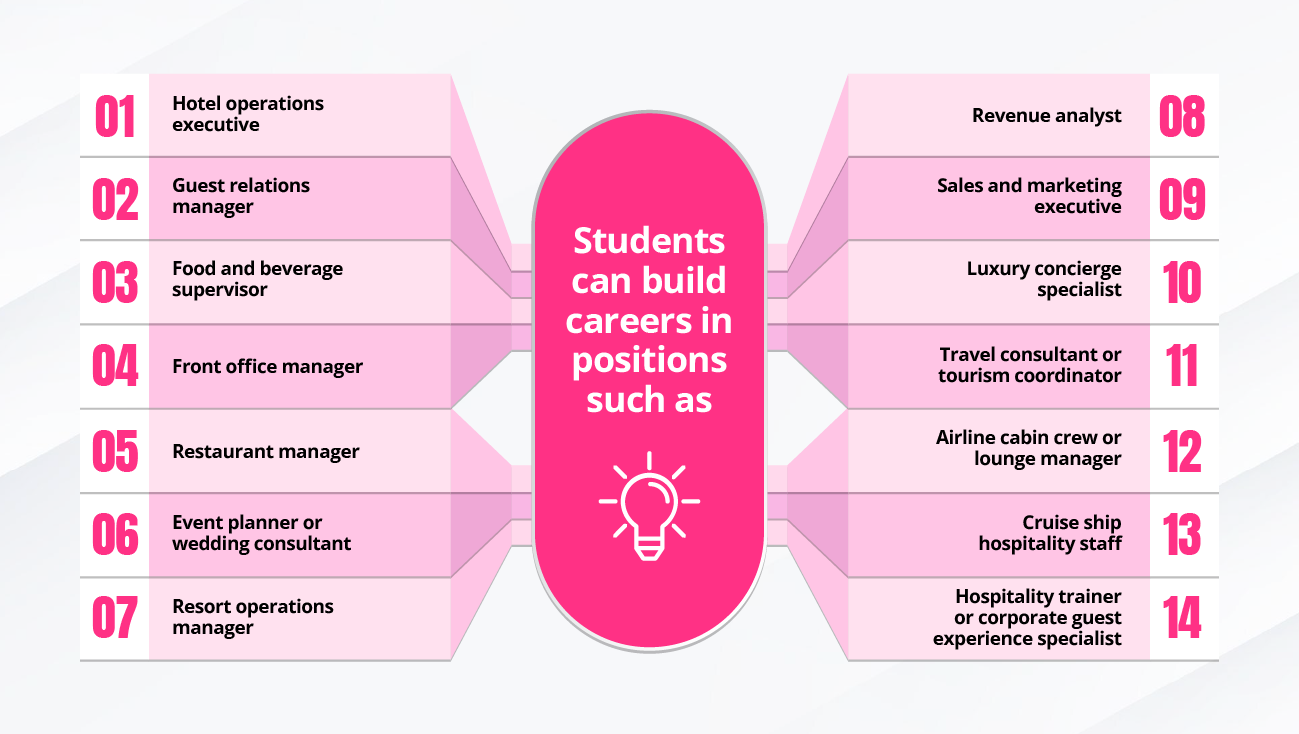
With experience, graduates move into leadership roles like general manager, operations head, regional director, or hospitality entrepreneur.
Eligibility and Admission Requirements
Eligibility for hotel management courses abroad is relatively flexible, making it an accessible career path for students from diverse academic backgrounds. Most institutions expect completion of 10+2 for undergraduate programmes, along with English proficiency demonstrated through IELTS, PTE or TOEFL Scores.
Some programmes require a Statement of Purpose (SOP), Letters of Recommendation, and in certain cases, an interview. For postgraduate programmes, universities may ask for a bachelor’s degree in hospitality or a related field. Work experience is an advantage, especially for MBA-level courses, but not always mandatory.
Universities abroad value soft skills such as communication, teamwork and service-mindedness. Demonstrating passion for hospitality in your application can significantly strengthen your chances of admission.
Course Fees and Cost of Studying Hotel Management Abroad
The fees vary widely depending on the country, type of institution and course duration. Switzerland is known for premium hospitality schools, while countries like Canada, Germany and Hungary offer more affordable pathways. Students should also consider living expenses, internships, and part-time work options when planning their budget.
Despite the cost, the return on investment for hospitality degrees abroad remains strong, especially considering the international internship exposure and placement networks that universities provide. Moreover, countries like Canada, UK and Ireland offer post-study work visas, helping students gain global experience after graduation.
Why Study Hotel Management Abroad Instead of in Your Home Country?
The biggest value of studying hotel management abroad lies in exposure, exposure to new cultures, new service styles, diverse customer expectations, global work standards and industry innovations. Hospitality is a people-first profession, and working with international guests from day one builds confidence and communication skills that are hard to develop in classroom-only environments.
Students abroad also learn directly through practice. They sharpen their skills by working with experienced chefs, hospitality trainers, hotel managers and brand leaders. This depth of training, combined with global brand internships, sets international graduates apart in the competitive job market.
Moreover, an international hospitality degree offers mobility. With experience, students can work in Europe, the Middle East, North America or Asia, depending on their career goals. This level of mobility makes hotel management one of the few fields where global experience directly leads to higher salaries and senior positions.
How MetaApply IE Supports Your Hospitality Career Journey
Studying Abroad is not just about choosing a course. It’s a journey that involves shortlisting the right university, preparing for exams, securing visas, managing accommodation, and building a strong application profile. This is where MetaApply IE becomes your strategic partner.
With expert counsellors, top hospitality university tie-ups and end-to-end application support, MetaApply IE helps you navigate your hotel management abroad pathway effortlessly. Students also benefit from test preparation support, post-admit mentorship and personalised career guidance to ensure they start strong in a global hospitality environment.
Your hospitality career deserves the right foundation and MetaApply IE ensures that every step of your journey is guided, structured and aligned with your long-term goals. Fill in the form now to start your application with us.
Frequently Asked Questions
Most undergraduate programmes take 3-4 years, while postgraduate courses usually last 1-2 years, depending on the country and university.
Yes, internships are mandatory in most programmes and often include paid placements in top hotel chains, resorts, and cruise lines.
Popular specialisations include luxury hospitality, culinary arts, event management, tourism, cruise line management, and hospitality entrepreneurship.
You need 10+2 for UG, a bachelor’s degree for PG, and proof of English proficiency like IELTS, PTE, or TOEFL.
Graduates work globally as hotel managers, guest relations executives, restaurant managers, event planners, revenue analysts, and cruise hospitality staff.
Related Blogs