
Affordable Destinations to Study Engineering Abroad

Abhishek Mukhopadhyay
Published on December 26, 2025

Engineering remains one of the most sought-after fields worldwide, blending innovation, precision, and problem-solving into a single career path. Yet, when students look beyond their home country for world-class engineering education, one concern consistently rises to the top, which is affordability and adaptability. Studying abroad doesn’t always have to mean draining your finances. In fact, there are several countries where you can pursue an engineering degree that is globally recognised, career-focused, and remarkably affordable. This blog explores the best value-for-money destinations where quality education meets cost efficiency, helping you make an informed decision that suits both your ambitions and your budget.
Why Study Engineering Abroad?
Studying Engineering Abroad provides you exposure to diverse technologies, teaching methodologies, and global networks that shape the engineers of tomorrow. When you step into an international classroom, you don’t just learn how to build systems, you learn how to think differently, design solutions that matter, and lead in industries that are shaping the world’s future.
However, choosing the right country can make all the difference. Tuition fees, living expenses, and post-study opportunities all vary dramatically. The goal is to find a destination that balances affordability with educational quality, practical exposure, and long-term employability.
Top Affordable Destinations to Study Engineering Abroad
1. Germany – Engineering Excellence at Minimal Cost
Germany is a powerhouse when it comes to engineering education. Renowned for mechanical, automotive, and industrial engineering, the country’s universities are globally respected for their research-driven approach. What makes Germany stand out, however, is the cost factor; many public institutions offer little to no tuition fees for international students.
Living expenses average around €800–€1,000 per month, depending on the city, which is considerably lower than other Western European countries. You also get access to a strong industrial ecosystem with internship opportunities at global companies and the chance to stay post-graduation to seek employment.
Average Annual Tuition: €0–€3,000 Average Living Cost (per month): €850 Popular Fields: Mechanical, Electrical, Mechatronics, Civil, and Computer Engineering
2. Poland – European Degree at Asian Costs
Poland offers an ideal mix of quality education, low living costs, and an English-medium learning environment. Engineering degrees here are recognised across the European Union, making it a gateway to opportunities across Europe.
Tuition fees are among the lowest in Europe, ranging from €2,000 to €4,000 annually. The cost of living averages €400–€600 per month, depending on the city. This affordability makes Poland a rising star for international students, especially in fields like civil, electrical, and software engineering.
Average Annual Tuition: €2,000–€4,000 Average Living Cost (per month): €500 Popular Fields: Civil, Software, Electrical, and Environmental Engineering
3. Malaysia – High-Tech Education in the Heart of Asia
Malaysia offers a vibrant mix of quality education and cost efficiency. With its modern campuses, globally affiliated institutions, and English-taught programmes, it has become one of Asia’s most popular education hubs.
The country’s engineering programmes are designed with a strong industry focus, and the multicultural environment adds to the global learning experience. Tuition and living costs together remain significantly lower than in Western destinations.
Average Annual Tuition: RM 20,000–RM 35,000 Average Living Cost (per month): RM 1,200–RM 1,800 Popular Fields: Civil, Petroleum, Electrical, and Chemical Engineering
4. Canada – Affordable Options Beyond the Big Cities
While Canada is often associated with high living costs, certain regions and institutions offer affordable pathways to a globally recognised engineering degree. Smaller cities and provinces like Manitoba, Newfoundland, or Saskatchewan provide lower tuition rates and cheaper accommodation, all while maintaining strong academic standards.
Moreover, Canada offers excellent post-study work opportunities, allowing engineering graduates to gain practical experience and potentially settle long-term.
Average Annual Tuition: CAD 15,000–CAD 25,000 Average Living Cost (per month): CAD 1,000–CAD 1,500 Popular Fields: Civil, Mechanical, Software, and Environmental Engineering
5. Ireland – Affordable European Quality with Career Pathways
Ireland’s engineering education focuses heavily on innovation, research, and real-world application. The cost may be lower than in other English-speaking destinations, and the country offers strong career outcomes in sectors like renewable energy, construction, and IT infrastructure.
Graduates can stay back for up to two years under the Post-Study Work Visa scheme, giving them valuable international exposure and employability.
Average Annual Tuition: €9,000–€15,000 Average Living Cost (per month): €800–€1,200 Popular Fields: Civil, Biomedical, and Software Engineering
6. New Zealand – Quality Engineering Education with Lifestyle Perks
New Zealand offers a perfect combination of affordable education and high-quality life. The engineering curriculum here is deeply integrated with practical training and sustainability-focused research, making graduates industry-ready.
The country’s transparent immigration policies and the opportunity to work part-time during studies make it an attractive option for international students looking to balance costs while gaining experience.
Average Annual Tuition: NZD 20,000–NZD 30,000 Average Living Cost (per month): NZD 1,200–NZD 1,500 Popular Fields: Civil, Environmental, and Mechanical Engineering
Note: All prices mentioned are approximate values. Students should check official government websites or the respective university websites for exact figures.
How to Make the Most of Your Engineering Abroad Journey
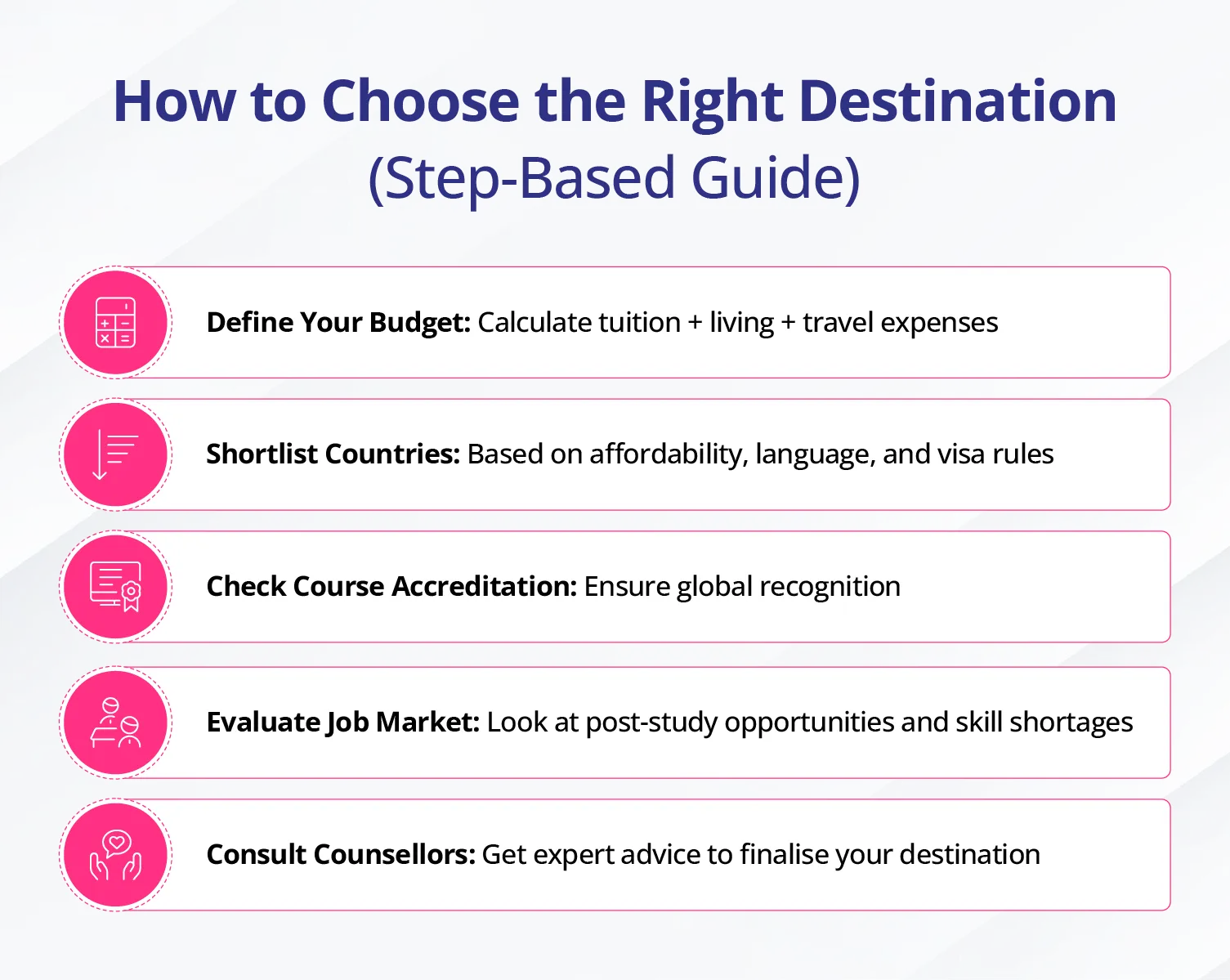
Affordability is only one part of the decision. A smart student evaluates long-term benefits, employability, exposure, and growth. Choose a destination that not only fits your financial plan but also aligns with your career goals. With the right guidance, you can unlock a future that’s globally connected and personally rewarding.
At MetaApply IE, our expert counsellors help you identify the best-fit destination, course, and financial plan tailored to your profile. From choosing the right engineering programme to preparing your visa and arranging accommodation, we take care of every detail. Our support extends to TestPrep, Career Counselling, and Scholarship Guidance, ensuring your Study Abroad Experience is seamless and value driven.
If you’ve ever wondered whether pursuing your engineering dream abroad is within your reach, it absolutely is. Let’s make it happen together. Fill in the form, and our experts will connect with you to start your journey.
Interested in Study Abroad?
MetaApply can help - fill the form
Enquire Now
Frequently Asked Questions
Germany tops the list due to its low or zero tuition fees at public institutions, followed closely by Poland and Malaysia for their balance of cost and quality.
Yes. Most countries, including Germany, Canada, Ireland, and New Zealand, allow part-time work during studies, which can help cover living expenses.
Absolutely. Degrees from these destinations hold international accreditation and recognition, making graduates eligible for global opportunities.
Apply for scholarships, choose smaller cities, consider shared accommodation, and work part-time to offset expenses.
Most undergraduate engineering degrees last four years, while postgraduate ones take one to two years, depending on the country.