
Study Abroad University Ranking List: The Smart Student’s Guide to Choosing the Right University

Abhishek Mukhopadhyay
Published on December 14, 2025

When it comes to studying abroad, most students start with one common question; which university should I choose? The answer almost always leads them to a “study abroad university ranking list”. And while rankings are important, they’re not the whole story. What truly matters is how you use them strategically, thoughtfully, and with a plan that aligns with your personal goals.
So, let’s break it down. This is not your usual overview; this is a value-driven, insight-heavy guide designed to help you navigate rankings with confidence and make informed decisions that bring you closer to your study abroad dream.
Why University Rankings Matter (and When They Don’t)
A university ranking list gives you an overview of how institutions compare globally. It can help you understand which universities perform well in terms of teaching quality, research output, global reputation, and employability.
But the truth is, rankings alone cannot tell you where you will thrive. They can show you data, but not your experience. A Top-Ranking University may have outstanding research facilities, but perhaps limited focus in your specific subject. Another university ranked lower overall might have world-class faculty in the exact area you want to pursue.
In short, rankings are a starting point, not the final decision. Use them to narrow down your options, not to define them.
How to Use a Study Abroad University Ranking List - Step by Step
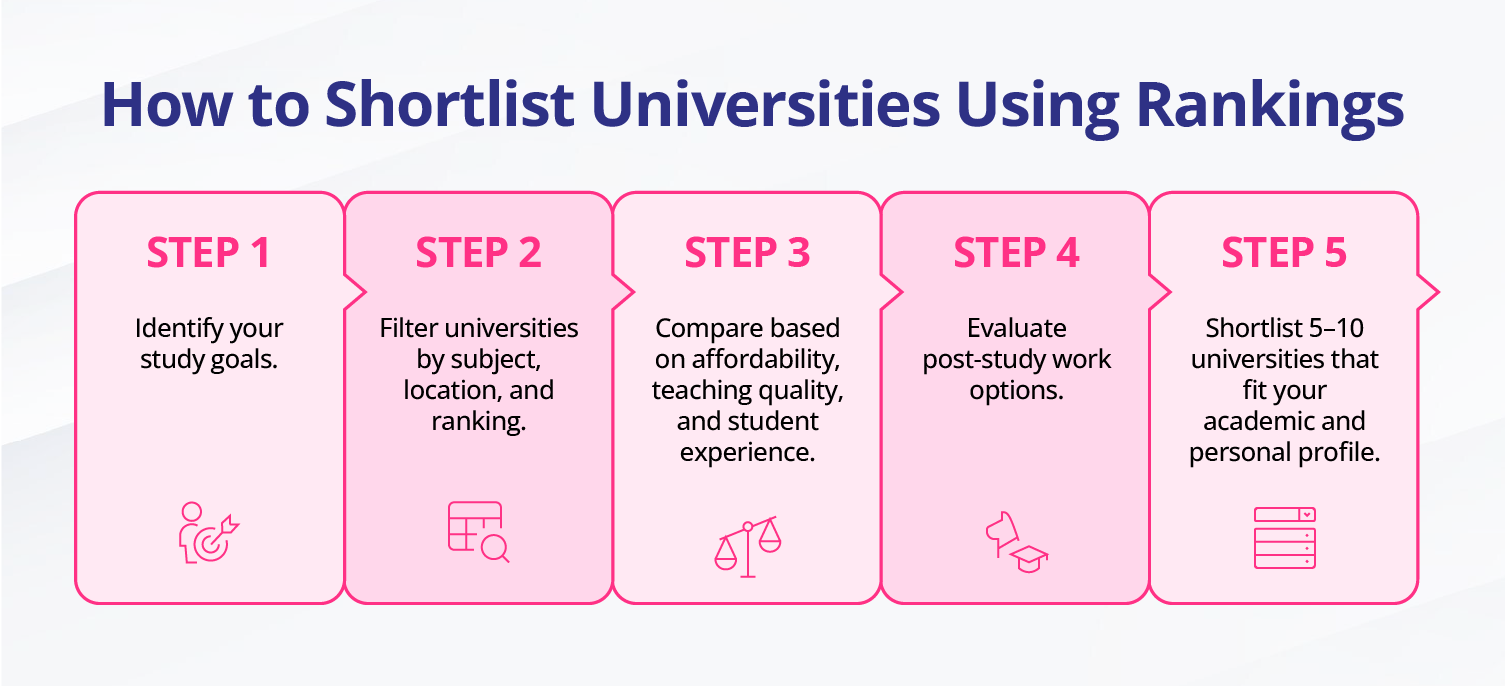
A smart student doesn’t just look at the list; they decode it. Here’s how to turn a ranking list into an actionable shortlist:
Step 1: Define Your Goals
Be clear about what you want like academic excellence, employability, cultural exposure, or post-study work opportunities. Your goal determines which ranking factors should matter most to you.Step 2: Choose Reliable Rankings
Different ranking systems use different criteria. Global lists (like QS or THE) give a broad perspective, while subject-specific lists help you find universities strong in your field.Step 3: Filter by Subject Strength
A university that ranks in the top 100 overall might not rank the same for your subject. Check where it stands for your particular discipline.Step 4: Compare Countries and Destinations
Look beyond the rank, consider the destination’s education system, cultural environment, cost of living, and work opportunities after graduation.Step 5: Check for Teaching Quality and Support Services
Many high-ranking universities focus heavily on research. For undergraduates or professional courses, teaching quality, mentorship, and career services matter more.Step 6: Build Your Shortlist
Combine ranking data with factors like affordability, lifestyle, and career outcomes. Shortlist 5–10 universities that strike the right balance.Understanding the Ranking Criteria
Different ranking agencies measure performance differently. Understanding what they evaluate helps you decide which ranking suits your needs.
| Metric | What It Represents | What to Consider |
|---|---|---|
| Academic Reputation | Based on surveys of academics worldwide | Reflects research prestige, not necessarily teaching quality |
| Employer Reputation | Reflects how employers view graduates | Useful if you plan to work globally |
| Faculty–Student Ratio | Indicates personalised learning and class size | Smaller ratio often means better student attention |
| Research Citations | Measures research impact | Crucial for research-based courses |
| International Outlook | Proportion of international students and staff | Indicates diversity and global exposure |
| Teaching Environment | Learning resources and student support | Important for undergraduates and skill-based courses |
When evaluating rankings, identify which of these factors align most with your goals. If you’re focused on employability, look closely at employer reputation. If you’re pursuing research, citations and academic reputation should be your focus.
Beyond the Numbers - The Importance of “Fit”
A Top 50 University isn’t always the right one for you. “Fit” is a combination of academic, cultural, and personal comfort. Think about:
- Learning style: Do you prefer lecture-based learning or project-based?
- Location: Do you want a bustling city or a quiet campus town?
- Affordability: Can you comfortably manage tuition and living costs?
- Post-study opportunities: Does the country offer strong work visa policies or job markets in your field?
- Community: Does the campus culture resonate with your personality and goals?
Remember, ranking lists can show prestige, but they can’t measure personal comfort, and comfort is what sustains your motivation through the course.
How to Align Ranking Data with Your Career Goals
Every student’s objective is different. For some, it’s getting a degree from a prestigious global institution; for others, it’s building an international career. Here’s how to connect rankings with career outcomes:
- Look at employability indicators: Rankings that include employer reputation or graduate employment rates give a real-world view of success.
- Research alumni success: How many graduates work in global companies or pursue further studies at renowned institutions?
- Check industry links: Strong ties with employers often translate into internships and placement opportunities.
- Focus on countries with strong job markets: A slightly lower-ranked university in a high-employment destination can be more beneficial long-term than a top-ranked one in a saturated job market.
Quick Comparison Table: What to Prioritise
| Your Goal | Key Ranking Metric | Also Consider |
|---|---|---|
| Research career | Research citations | Access to labs, supervisors |
| Employment abroad | Employer reputation | Internship programmes, visa policies |
| Affordable quality | Teaching quality | Cost of living, scholarships |
| Cultural exposure | International outlook | Language, safety, lifestyle |
| Skill-based learning | Student support | Industry tie-ups, placement record |
Use this table to decide what matters most for your personal goals before shortlisting universities.
Final Thoughts
A “Study Abroad University Ranking List” is a powerful tool, if you know how to use it. It can give direction, set benchmarks, and simplify decision-making. But what truly defines your journey is clarity; clarity about what you want.
Don’t chase numbers. Chase opportunities that align with your aspirations, budget, and future plans. Your ideal university may not always be the highest-ranked one, it’s the one that gives you the right mix of exposure, quality, and value.
At MetaApply IE, we help students look beyond rankings and find what truly fits them. Our Expert Counsellors assist you in identifying the right course, college, and destination based on your profile and goals. From application submission to securing scholarships, test preparation, and visa interviews, we ensure every detail is handled professionally.
If you’re ready to begin your journey to study abroad, fill in the form and connect with our experts today. Let’s turn your aspiration into a well-planned academic adventur
Interested in Study Abroad?
MetaApply can help - fill the form
Enquire Now
Frequently Asked Questions
They are fairly accurate in measuring academic reputation and research output but may not fully reflect teaching quality or student life.
Not necessarily. Focus on subject ranking and the university’s strengths in your area of study. Many universities outside the top 100 offer excellent education and employability outcomes.
Yes. Rankings are updated annually based on new data, research performance, and survey results. A steady improvement trend often reflects consistent institutional growth.
Look at the methodology used. Some lists focus on academic factors, while others weigh employability and student diversity more heavily. Choose the one that aligns with your priorities.
Use it as a filter, not as your final decision. Combine ranking data with factors like cost, destination, and personal comfort before applying.