
Study MBBS Abroad: Course Duration, Structure & What Indian Students Should Expect

Abhishek Mukhopadhyay
Published on April 11, 2026

If you are planning to study MBBS abroad, one of the first questions that naturally comes to mind is simple: How long does the course actually take?
Many Indian students assume the duration will be the same everywhere. But the reality is slightly different. While the goal is the same – becoming a qualified doctor – the structure, teaching style, and timeline can vary depending on the country and university.
Understanding the MBBS Course Duration Abroad is important because it helps you plan everything ahead: your finances, licensing exams, internships, and even your career timeline. Once you know what the journey looks like, the path becomes much clearer.
So, let’s break it down in a way that makes sense.
How Long Does an MBBS Course Abroad Usually Take?
In most countries, the MBBS Programme Abroad typically lasts between 5 and 6 years. This duration usually includes both academic study and clinical training.
Here’s the general breakdown:
- 4–5 years of classroom learning and medical theory
- 1 year of clinical internship or hospital training
During the first few years, students study subjects like anatomy, physiology, pathology, pharmacology, and biochemistry. As the programme progresses, the focus shifts toward clinical rotations and hands-on hospital experience.
This structure ensures that by the time you graduate, you are not just academically prepared but also familiar with real patient care.
What Happens During the First Few Years?
The initial phase of an MBBS Course Abroad is usually focused on building strong medical foundations.
Students spend these years studying core medical sciences such as:
- Anatomy
- Physiology
- Biochemistry
- Microbiology
- Pathology
- Pharmacology
At the same time, many universities introduce early clinical exposure, meaning students may visit hospitals, observe doctors, or participate in supervised practical training.
This approach helps bridge the gap between theory and real medical practice from the very beginning.
When Do Clinical Rotations Begin?
Clinical rotations generally begin around the third or fourth year of the programme.
During this stage, students rotate through different hospital departments, including:
- Internal medicine
- Surgery
- Paediatrics
- Obstetrics and gynaecology
- Psychiatry
- Emergency medicine
This is where medical education truly comes alive. Instead of only studying textbooks, students start interacting with patients, assisting doctors, and observing real medical procedures.
Clinical exposure is one of the most important factors when choosing where to Study MBBS Abroad.
The Internship Year: The Final Step
Most MBBS programmes abroad include a compulsory internship in the final year.
During this period, students work in hospitals under supervision and gain practical experience in diagnosing and managing patients.
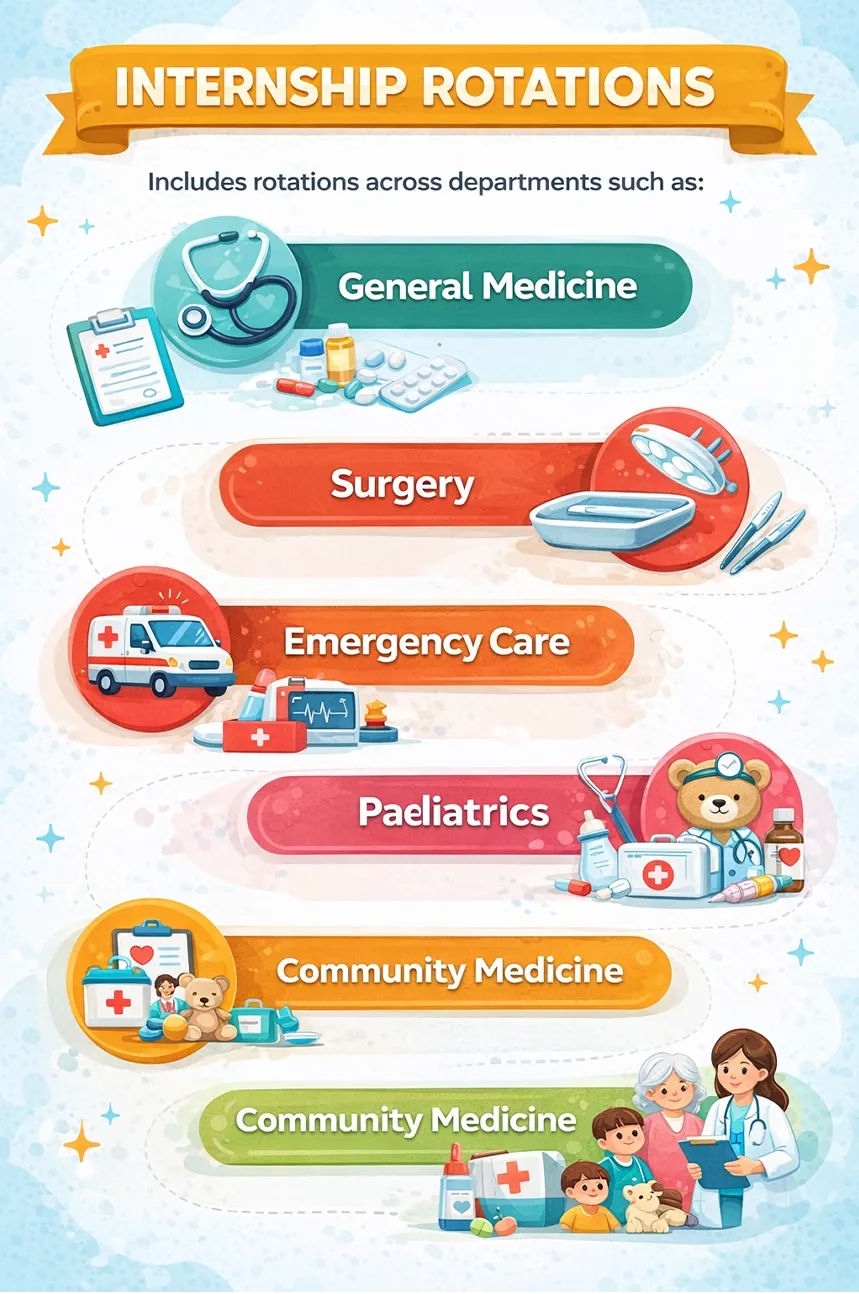
This year is critical because it prepares students for the transition from medical student to practising doctor.
Does MBBS Duration Change from Country to Country?
Yes, the exact duration can vary slightly depending on the destination.
Here’s a general idea of how long MBBS programmes usually take in popular study destinations:
| Country | Typical Duration |
|---|---|
| Russia | 6 years |
| Georgia | 6 years |
| Kyrgyzstan | 5-6 years |
| Uzbekistan | 6 years |
| UK | 5-6 years |
| Caribbean Medical Schools | 5-6 years |
While the timelines may differ by a year or so, the structure remains fairly consistent: academic learning followed by clinical training.
Why Many Students Choose to Study MBBS Abroad
For many Indian students, studying medicine overseas is not just about availability of seats. It’s also about global exposure, modern infrastructure, and diverse clinical experience.
Some key advantages include:
- International learning environments
- Exposure to different healthcare systems
- Modern laboratories and medical facilities
- Opportunities for global licensing exams
- Multicultural student communities
When chosen carefully, studying MBBS abroad can provide both quality education and broader career pathways.
Things to Check Before Choosing a Medical Programme Abroad
Before applying to any university, it’s important to evaluate a few critical factors.
Here are some essentials every student should verify:
Recognition and accreditation
Ensure the university is recognised by relevant medical authorities and listed in international directories.Clinical training quality
Look for programmes with strong hospital affiliations and practical exposure.Language of instruction
Confirm that the course is taught in English if you are not fluent in the local language.Internship structure
Check whether the internship is included within the course duration.Career flexibility
Make sure the programme allows you to pursue licensing exams in your desired country.Doing proper research at the beginning can prevent complications later.
Planning Your MBBS Journey Abroad
Studying Medicine Abroad is a long-term commitment that requires careful planning. From choosing the right destination to preparing documents and understanding course structure, every step matters.
The earlier you start exploring your options, the easier it becomes to secure admission in universities that match your goals, budget, and academic profile.
At MetaApply IE, our expert counsellors guide students through the entire process, from selecting the right universities to navigating applications and preparing for the next stages of the journey.
If you are considering Studying MBBS Abroad, connecting with the right guidance can help turn uncertainty into a clear and confident plan. Fill in the form today to speed up your MBBS journey.
Interested in Study Abroad?
MetaApply can help - fill the form
Enquire Now
Frequently Asked Questions
Most MBBS programmes abroad last 5 to 6 years, including academic study and clinical internship.
Yes, many universities include a compulsory internship in the final year as part of the programme.
Clinical rotations usually begin in the third or fourth year of the course.
Yes, many universities offer English-medium medical programmes specifically designed for international students.
For students who choose recognised universities with strong clinical training, studying MBBS abroad can provide quality education and global medical exposure.