
The Real Truth About Study Abroad in UK for MBBS

Abhishek Mukhopadhyay
Published on March 17, 2026

For decades, Indian students dreaming of becoming doctors have been told the same story: clear NEET, secure a government seat, or look elsewhere. But there is another path, one that many aspiring doctors overlook until it is almost too late. Studying medicine in the UK is not merely about earning an MBBS-equivalent degree; it is about entering one of the world’s most structured, research-driven, and clinically advanced medical ecosystems.
When students think about Study Abroad in UK, they often picture business degrees, finance programmes, or data science. Very few realise that the UK is home to one of the most respected medical education systems in the world. The pathway is rigorous, competitive, and highly rewarding. And unlike many other destinations, the UK’s approach to medicine focuses on clinical exposure, ethical practice, research participation, and real patient interaction from the early years of study.
If your goal is not just to become a doctor but to become a globally recognised medical professional, understanding how to Study Abroad in UK for MBBS could change the trajectory of your career.
Let’s explore what most students are not told about studying medicine in the UK.
The Reality Nobody Talks About: Medicine in the UK Is Different
In many countries, medical education begins with memorisation-heavy theoretical learning. The UK flips this model. Students are introduced to patients, case-based learning, and clinical thinking early in their academic journey.
This means students studying medicine in the UK learn to think like doctors long before they graduate.
Instead of simply studying anatomy and pharmacology in isolation, UK medical programmes focus on:
- Problem-based learning
- Clinical case discussions
- Early hospital exposure
- Communication with real patients
- Evidence-based medicine
This educational philosophy is precisely why graduates from UK Medical Schools are widely respected across healthcare systems worldwide.
For students considering Study Abroad in UK, this approach provides a unique advantage: you graduate not only with medical knowledge but also with practical decision-making skills.
Why the UK Is Quietly One of the Best Places to Study Medicine
The UK does not aggressively market its medical programmes globally the way some destinations do. Yet it consistently produces some of the most respected doctors, researchers, and medical innovators.
Here’s why.
Globally Recognised Medical Degrees
Medical degrees from the UK are recognised by major medical councils and regulatory bodies in many countries. This gives graduates the flexibility to pursue careers internationally after completing necessary licensing requirements.
For Indian students planning long-term careers in healthcare, Study Abroad in UK offers global mobility.
Clinical Exposure From Early Years
One of the strongest aspects of UK Medical Education is early clinical exposure.
Students often start hospital visits, simulated patient interactions, and clinical skill training within the first years of study. This ensures graduates are comfortable in real healthcare environments.
Research-Driven Medical Training
UK Universities are deeply connected with medical research institutions, hospitals, and pharmaceutical innovation centres.
Students interested in fields like:
- medical research
- biotechnology
- clinical trials
- public health
can find opportunities to participate in groundbreaking research projects during their studies.
Structured Career Pathway
The UK has one of the most clearly structured pathways from medical school to professional practice.
The journey generally looks like this:
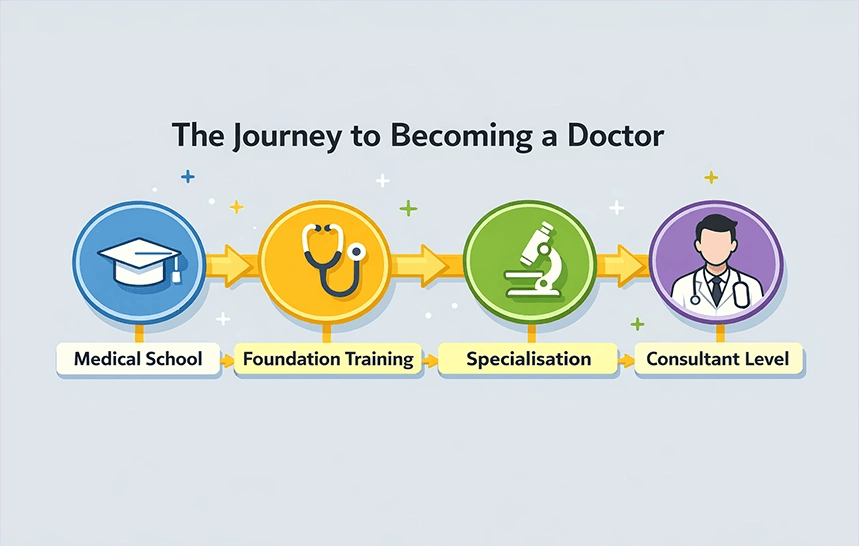
This structured pathway ensures doctors receive consistent training, supervision, and skill development.
A Medical Career Map: The UK Pathway Explained
Understanding the pathway is essential before deciding to Study Abroad in UK for medicine.
Below is a simplified flow chart of the medical career journey.
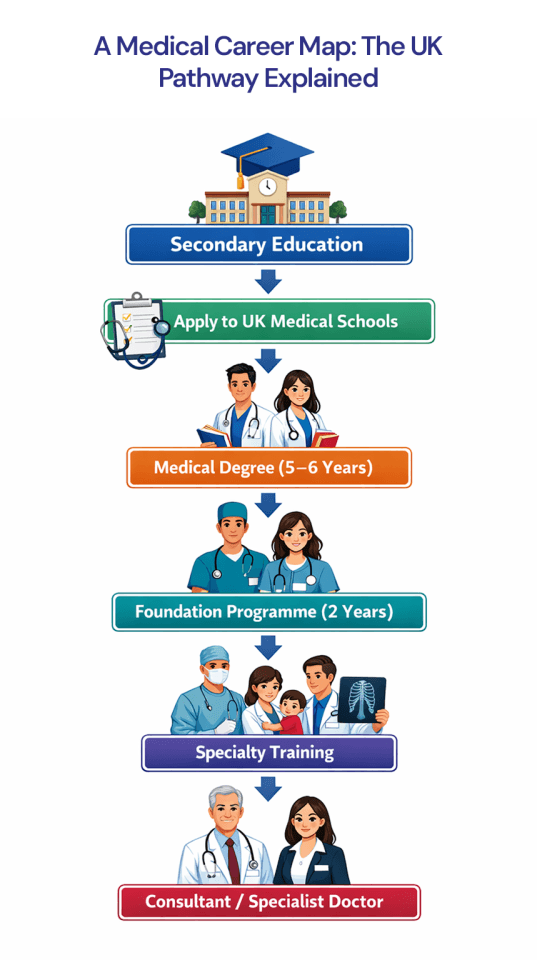
Each stage is carefully designed to build expertise gradually.
What Indian Students Must Know Before Applying
This is where many aspiring doctors make mistakes.
Studying medicine in the UK is not only about academic grades, it requires a strategic approach.
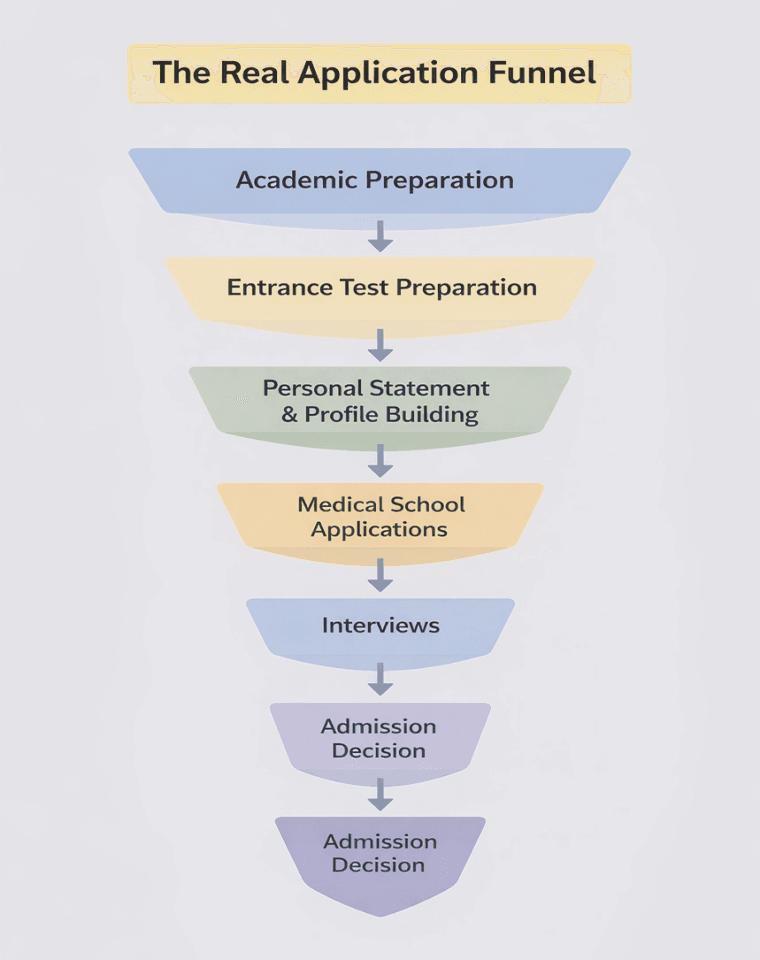
Each stage carries significant weight in the selection process.
Entrance Exams: The Gatekeepers of Medical Admissions
Most UK medical schools require students to take specific aptitude tests designed to evaluate critical thinking, decision-making, and problem-solving abilities.
These exams assess whether applicants have the mindset required for a medical career.
Preparing strategically for these tests is essential for students aiming to Study Abroad in UK for medicine.
The Secret Factor: Your Personal Statement Matters More Than You Think
Unlike many countries, UK medical schools look beyond marksheets.
Admissions committees want to understand:
- Why you want to become a doctor
- What experiences shaped your interest in medicine
- Whether you understand the responsibilities of the profession
Students who demonstrate genuine motivation and healthcare awareness often stand out.
Clinical Exposure Before Applying: The Hidden Advantage
Here’s something few counsellors discuss openly.
Medical schools in the UK prefer applicants who already have some exposure to healthcare environments.
This could include:
- hospital volunteering
- shadowing doctors
- community healthcare participation
- healthcare-related internships
These experiences demonstrate that the student understands the realities of medicine.
Cost Considerations When You Study Abroad in UK
Medical education in the UK is considered an investment rather than simply a tuition expense.
Students typically need to account for:
- tuition fees
- accommodation
- living expenses
- academic resources
- healthcare coverage
However, the long-term career prospects and international recognition often make this investment worthwhile.
The Process of Studying MBBS in the UK: Step-by-Step
For students planning to Study Abroad in UK, the process generally follows a structured timeline.
Step 1: Academic Preparation
Students must complete secondary education with strong grades in science subjects such as biology and chemistry.
Step 2: Entrance Test Preparation
Preparing for medical aptitude tests requires months of dedicated effort.
Step 3: Profile Building
Strong applicants often combine academics with:
- healthcare exposure
- volunteering
- research interests
- extracurricular achievements
Step 4: Application Submission
Medical School Applications in the UK follow a centralised system where students apply to selected universities.
Step 5: Interviews
Shortlisted candidates are invited for interviews designed to evaluate communication skills, empathy, and ethical judgement.
Step 6: Admission and Visa Processing
Once admitted, students proceed with visa documentation and travel arrangements.
The Cultural Advantage of Studying Medicine in the UK
Studying Medicine Abroad is not only an academic journey, it is also a cultural transformation.
Students living in the UK experience:
- multicultural hospital environments
- exposure to international healthcare systems
- diverse patient communities
- global research collaboration
This environment shapes doctors who can work effectively anywhere in the world.
The Unspoken Truth: Medicine Is Also About Emotional Intelligence
A doctor’s success is not measured only by medical knowledge.
The UK medical education system strongly emphasises:
- empathy
- patient communication
- ethical decision-making
- teamwork
These qualities are essential in modern healthcare systems.
Should You Choose the UK for Your Medical Career?
If your goal is to build a global medical career rather than simply obtain a degree, Study Abroad in UK offers unique advantages.
Students benefit from:
- internationally respected medical education
- advanced clinical training
- research exposure
- global career opportunities
However, navigating the complex admission process requires planning, preparation, and expert guidance.
The Smart Way to Secure Your Medical Future
Studying medicine abroad is one of the most significant academic decisions a student can make. The process involves university selection, entrance exam preparation, application strategy, and visa planning.
This is where expert guidance becomes essential.
MApply, the medical vertical by MetaApply IE helps aspiring doctors navigate the entire journey of Study Abroad in UK with personalised counselling, profile building strategies, university selection support, and application assistance.
From identifying the right universities to preparing students for interviews and entrance tests, the team ensures that applicants approach the process strategically rather than blindly.
For students who want to pursue medicine internationally, the difference between a dream and a successful admission often lies in having the right guidance at the right time. Fill in the form today and get in touch with our expert counsellors.
Interested in Study Abroad?
MetaApply can help - fill the form
Enquire Now
Frequently Asked Questions
Yes, Indian students can apply to UK medical schools if they meet academic requirements, entrance test criteria, and English language proficiency standards.
Medical degrees in the UK typically take five to six years depending on the university and programme structure.
Yes, UK medical degrees are widely recognised and respected across many global healthcare systems.
Yes, most universities require medical aptitude tests as part of the admission process.
The first step is preparing academically and understanding the admission requirements of UK medical universities.