Student Loans for Studying Abroad: Complete Education Loan Guide 2026
Student Loans for Studying Abroad: Complete Education Loan Guide 2026

Studying abroad is a dream for many students who want access to global education, international exposure, and better career opportunities. However, the cost of studying overseas can be a major challenge for students and families. Expenses such as tuition fees, accommodation, travel, insurance, and daily living costs can make international education expensive. This is why many students now choose student loans for studying abroad to manage their education expenses more easily.
An education loan helps students finance their studies without compromising on their academic goals. Today, student loans are not considered just a backup option but an important financial solution for students planning to study abroad. With flexible repayment options, competitive interest rates, and student-friendly plans, education loans make global education more accessible and manageable.
Understanding Student Loans for Studying Abroad
Student loans for studying abroad are specially designed financial products that help students cover the cost of international education. These loans are offered by banks, NBFCs, government-supported schemes, and international financial institutions. Compared to regular personal loans, education loans usually provide lower interest rates, flexible repayment terms, and moratorium periods that allow students to start repayment after completing their course.
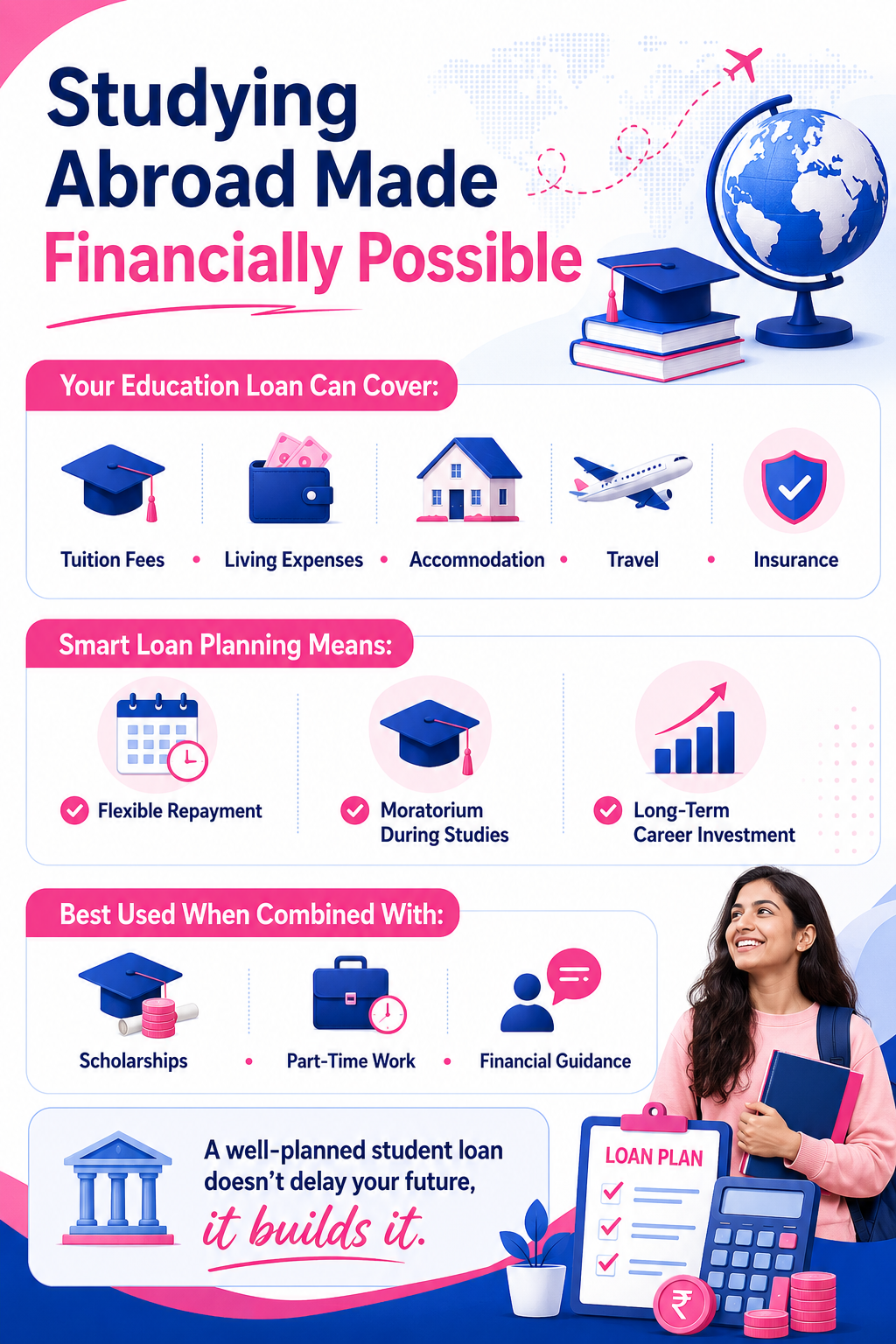
Depending on the lender and loan type, a study abroad education loan may cover:
- Tuition fees
- Accommodation expenses
- Travel costs
- Health insurance
- Visa charges
- Books and study materials
- Daily living expenses
Some lenders directly transfer tuition fees to the university, while the remaining amount may be provided to students in stages to help manage living and academic expenses during the course duration.
Why Student Loans Matter in International Education
The rising cost of global education has made financial planning an essential part of studying abroad. Even students who secure partial scholarships often rely on education loans to cover remaining expenses. Student loans enable access to top universities and programmes that may otherwise be financially unattainable.
Beyond immediate funding, student loans also encourage financial responsibility. Structured repayment plans teach students to manage long-term commitments, align earnings with obligations, and plan careers strategically. When used wisely, an education loan becomes an investment in earning potential rather than a financial burden.
Types of Student Loans Available for Studying Abroad
Student loans for international education vary based on lender, destination country, and applicant profile. Understanding these categories helps students choose the most suitable funding option.
- Secured Education Loans
Secured education loans require collateral such as property, fixed deposits, or other financial assets. These loans typically offer lower interest rates and higher loan amounts, making them suitable for students enrolling in high-cost programmes or longer degrees. Secured loans are commonly offered by traditional banks and public financial institutions.
- Unsecured Education Loans
Unsecured loans do not require collateral and are based on the student’s academic profile, university ranking, course selection, and future earning potential. While interest rates may be higher, unsecured loans offer flexibility and faster processing, making them popular among students pursuing programmes at recognised international institutions.
- Government-Backed Education Loans
Many countries offer government-supported education loan schemes to promote higher education. These loans often come with subsidised interest rates, extended moratorium periods, or repayment benefits. Eligibility criteria may be linked to income thresholds, academic performance, or national policies.
- International Lender Loans
Some international financial institutions and global lenders offer education loans specifically for students studying abroad. These loans may not require local collateral or co-signers and are often tailored to students studying in destinations such as the USA, UK, Canada, Europe, and Australia.
Expenses Covered Under Student Loans
Education loans for studying abroad generally cover a broad range of academic and living expenses. Tuition fees form the largest component, but loans also include accommodation costs, food, travel, books, academic materials, and mandatory insurance. Many lenders also account for visa fees, exam fees, and initial settling-in expenses.
By covering both academic and non-academic costs, student loans allow students to focus on their studies without constant financial pressure, ensuring a more stable and productive learning experience.
Eligibility Criteria for Education Loans
Eligibility for student loans depends on multiple factors, including academic background, chosen course, institution reputation, and financial profile of the applicant or co-applicant. Lenders often assess the employability of the course and the student’s future earning potential when evaluating loan applications.
Admission to a recognised international university is usually a mandatory requirement. Some lenders also consider standardised test scores, language proficiency, and previous academic consistency. Understanding these criteria early helps students prepare stronger loan applications.
Interest Rates and Repayment Structure
Interest rates for studying abroad loans vary depending on loan type, lender, and risk assessment. Secured loans typically offer lower interest rates, while unsecured loans may carry higher rates due to increased risk. Some lenders offer simple interest during the study period and compound interest after course completion.
Repayment usually begins after a moratorium period, which includes the course duration and an additional grace period. Repayment tenures can range from five to fifteen years, allowing students to align repayments with their career progression and income growth.
The Importance of Strategic Loan Planning
Taking an education loan without a clear financial plan can lead to unnecessary stress later. Strategic planning involves understanding total costs, realistic earning potential, currency fluctuations, and repayment obligations. Students should evaluate loan terms carefully rather than focusing solely on loan amount or interest rate.
Combining education loans with scholarships, part-time work opportunities, or institutional funding can significantly reduce financial pressure. Professional guidance ensures that students choose loan options that align with both academic goals and long-term financial stability.
Common Challenges Faced by Students
Many students face difficulties navigating the education loan process due to complex documentation, varying lender requirements, and lack of clarity around repayment terms. Delays in loan approvals can impact admission deadlines and visa applications, adding further stress.
Another common challenge is choosing between multiple loan offers without fully understanding hidden costs, currency risks, or long-term implications. Without expert advice, students may commit to loans that are misaligned with their academic and career trajectory.
Long-Term Impact of Education Loans
When used responsibly, student loans can be life changing. Graduates with international exposure often gain access to higher-paying roles, global career opportunities, and faster professional growth. Over time, the return on investment from an international education often outweighs the initial financial commitment.
Education loans also help students build credit history and financial discipline early in their careers. This foundation can be beneficial for future financial planning, entrepreneurship, or further education.
How MetaFinance Supports Students with Education Loans
Financing international education requires more than just securing a loan, it demands clarity, comparison, and confidence. MetaFinance, a dedicated financial support service by MetaApply, simplifies the entire education loan journey for students aspiring to study abroad.
MetaFinance helps students evaluate loan options across multiple lenders, understand eligibility criteria, and select funding solutions aligned with their academic plans and future goals. From documentation support and lender coordination to loan sanction guidance and disbursement timelines, MetaFinance ensures a smooth, transparent process.
By integrating education loan planning with university admissions and visa processes, MetaFinance enables students to move forward without financial uncertainty. This holistic approach allows students and families to make informed decisions with long-term stability in mind.
Final Thoughts on Student Loans for Studying Abroad
Student loans for studying abroad are not just financial instruments; they are enablers of global ambition. With careful planning, informed choices, and expert support, education loans can unlock access to world-class institutions and international careers.
For students ready to invest in their future, the right financial guidance makes all the difference. With structured support through MetaFinance, studying abroad becomes a planned, confident, and achievable journey, one where finances empower progress rather than limit potential.
At MetaApply IE, our expert counsellors take care of every aspect of your study abroad journey. From identifying the right course, college, and destination to managing applications, securing financial aid, and preparing you for visa interviews, we provide end-to-end guidance with absolute clarity. Our integrated services, including TestPrep and Career Counselling ensure you are academically prepared, strategically positioned, and confident at every step.
If you believe you can make a difference and see international education as the ideal next step, MetaApply IE stands beside you as a trusted partner, making your journey seamless, structured, and truly hassle-free.
Frequently Asked Questions
Yes, many banks and financial institutions offer education loans specifically designed to support students studying overseas.
Student loans generally cover tuition fees, living expenses, accommodation, travel, insurance, and other study-related costs.
Not always. Both secured (with collateral) and unsecured (without collateral) education loan options are available, depending on the lender and student profile.
Repayment usually begins after the course completion along with a moratorium or grace period, as defined by the lender.
Yes, students can use education loans alongside scholarships or grants to manage the overall cost of studying abroad.
Related Blogs