
How Students Actually Make It to the UK for Studies: Student-Proof Guide
How Students Actually Make It to the UK for Studies: Student-Proof Guide

Studying in the UK is not an impulsive decision. It usually comes after months of thinking, conversations with family, scrolling through university websites, and trying to understand whether this move actually makes sense for your future. The UK is appealing, but it is also complex. The system is different, the expectations are higher, and the margin for error is smaller than most students realise.
This is why approaching the UK study process casually often leads to confusion, delays, or poor decisions. Approaching it with clarity, however, can turn it into one of the most rewarding academic and career moves a student can make.
This blog explains how studying in the UK actually works, not as a checklist, not as marketing copy, but as a process. From choosing the right course to settling into life in the UK, this is what students need to understand before they apply.
Why the UK Continues to Attract Serious Students
The UK’s appeal lies in structure. Its education system is designed to move students efficiently from learning to employment. Degrees are shorter, assessment is practical, and courses are closely aligned with industry needs. For students who value time, return on investment, and global credibility, this matters.
A one-year master’s degree does not simply save a year. It reduces tuition costs, living expenses, and opportunity cost. Students enter the job market earlier, with a qualification that is recognised internationally. Undergraduate degrees being completed in three years follow the same logic.
Beyond academics, the UK offers a stable post-study pathway through the Graduate Route visa. This allows international students to stay back and work after completing their degree, giving them real exposure to the UK job market and international work culture. For many students, this transition period is where the true value of studying in the UK is realised.
Course Selection: The Decision That Shapes Everything Else
The most important decision in the UK study process is not the university; it is the course. UK universities are very particular about academic progression. They want to see a logical connection between a student’s previous education and their chosen programme.
This is where many applications fail quietly. Students choose courses based on popularity or perceived job demand without considering whether their academic background supports that choice. When this happens, the application becomes difficult to justify, both to the university and later during the visa process.
A well-chosen course strengthens every part of the journey. It makes the Statement of Purpose clearer, improves acceptance chances, and reduces visa risk. It also ensures that the student is actually prepared for the academic rigour of the programme once they arrive in the UK.
Understanding Universities Beyond Rankings
University rankings dominate online conversations, but in practice, they are only one piece of the puzzle. The UK has a wide range of institutions, each serving different academic and professional goals.
Some universities focus heavily on research, while others are known for teaching quality, industry exposure, and employability. Location also plays a significant role. A university in a major city may offer better part-time work opportunities and industry access, while one in a smaller town may provide lower living costs and a more focused academic environment.
Students who make informed choices look at entry criteria, assessment methods, graduate outcomes, and support systems, not just rank positions. This approach leads to better academic experiences and stronger career results.
Entry Requirements and English Language Criteria
UK universities evaluate applications holistically. While academic scores matter, they are rarely the only deciding factor. Relevant background, consistency in education, and clarity of purpose are equally important.
English language requirements often cause unnecessary stress. The UK accepts multiple recognised tests, and many universities offer flexibility depending on a student’s prior education. In some cases, English language requirements can be waived or adjusted, but this depends on institutional policy and correct documentation.
Understanding where flexibility exists and where it does not, saves students time and repeated applications.
The Role of the Statement of Purpose
The Statement of Purpose is the backbone of a UK application. It is not a creative essay and not a motivational speech. It is a professional document that explains academic intent.
Universities use it to assess whether a student understands the course, has realistic expectations, and can articulate future goals. A strong SOP shows direction and maturity. A weak one raises doubts, even if the rest of the profile is acceptable.
Students often underestimate how closely UK universities read this document. Those who invest time in getting it right often see significantly better outcomes.
Offers, Finances, and Decision-Making
Receiving an offer letter is an important milestone, but it is not the end of the process. Understanding the conditions attached to offers, fee structures, deposit requirements, and scholarship opportunities is essential before making a final decision.
Studying in the UK requires financial planning. While tuition fees can seem high, the shorter duration of courses and part-time work options often balance the overall cost. Scholarships, though usually modest, can reduce the financial burden when planned for early.
Students who rush this stage often regret it later. Those who evaluate offers carefully make more confident and sustainable choices.
Visa Application: Precision Matters
The UK student visa process is procedural. It does not rely on subjective judgement or interviews in most cases. Once a student receives a Confirmation of Acceptance for Studies (CAS), the visa application becomes a matter of accuracy.
Financial documentation, academic history, and course credibility must align. Errors or inconsistencies can cause delays or refusals. When handled correctly, however, the UK visa process is one of the more predictable study visa systems globally.
Preparing for Life in the UK
Studying abroad is not only an academic transition but also a cultural one. Accommodation planning, understanding work regulations, managing finances, and adapting to UK academic expectations all play a role in a student’s first-year experience.
Students who are prepared adjust faster, perform better academically, and feel more confident navigating life in a new country.
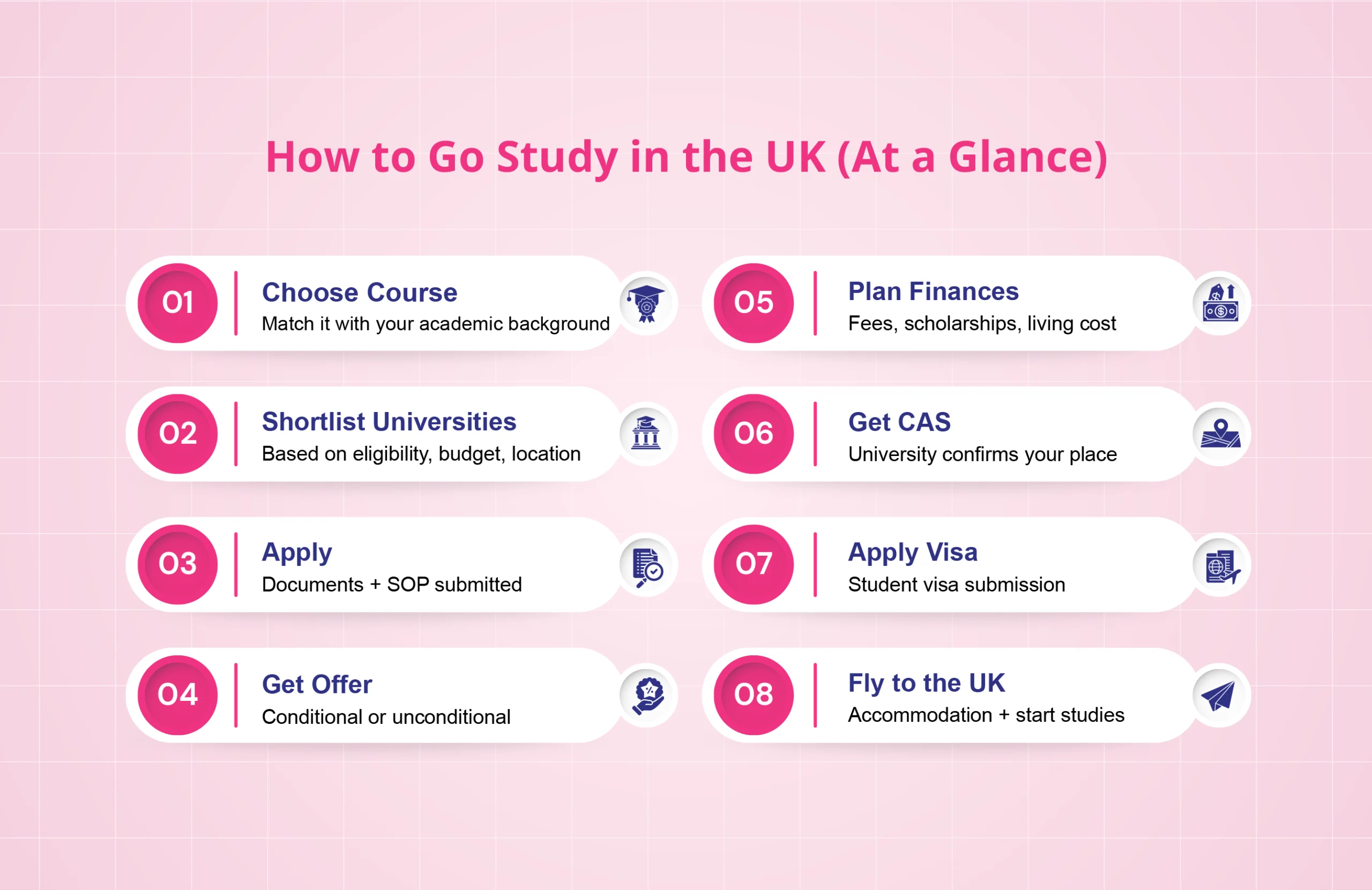
How MetaApply IE Supports the Entire Journey
This is where MetaApply IE becomes relevant. Studying in the UK involves multiple interconnected decisions, and mistakes in one stage often affect the next.
MetaApply IE works with students from the earliest stage of course and university selection through applications, documentation, visa guidance, and pre-departure preparation. The focus is not on pushing institutions, but on aligning student profiles with realistic, high-value outcomes.
By handling the process strategically rather than reactively, MetaApply IE helps students avoid common pitfalls and approach studying in the UK with confidence. Fill in the form today and start your UK journey with our expert counsellors.
Frequently Asked Questions
You apply by selecting a suitable course, submitting applications to UK universities, receiving an offer, and applying for a student visa.
Yes. The UK offers globally recognised degrees, shorter course durations, and post-study work opportunities.
Most do, but some accept alternatives or waive requirements based on prior education.
Yes. Students can work part-time during term and full-time during official breaks.
MetaApply IE provides guidance on course selection, applications, visas, scholarships, and pre-departure planning.
Related Blogs