Study in Germany vs Study in France for Engineering: Which One Builds a Stronger Global Career?
Study in Germany vs Study in France for Engineering: Which One Builds a Stronger Global Career?
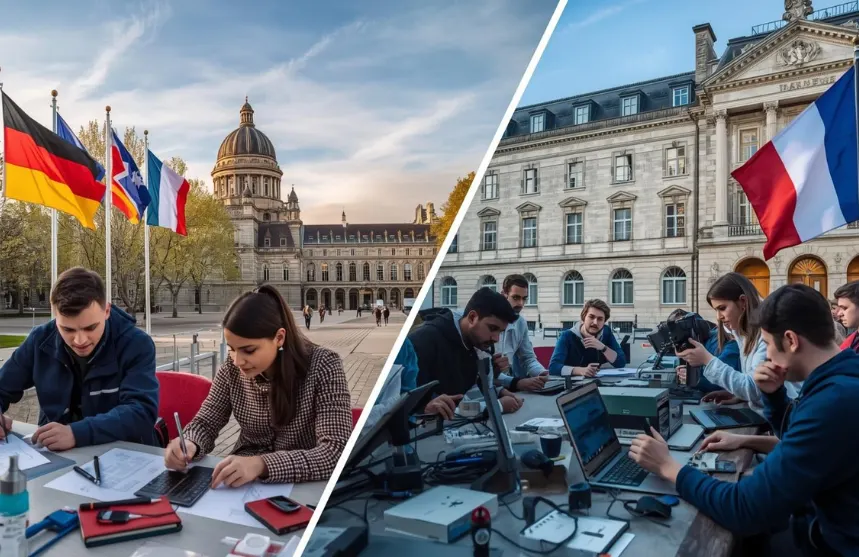
Recent trends show that two major destinations are emerging as hotspots for engineering studies: Germany and France. Both countries offer substantial opportunities for overseas aspirants seeking a globally recognised Engineering Degree. One is known for precision manufacturing, industrial depth and publicly funded universities with low tuition fees. The other blends academic rigour with specialised Grandes Écoles, strong state support and internationally recognised engineering clusters.
Both are powerful. Both produce world-class engineers. However, they shape careers in different ways and that difference matters.
So rather than relying on generic comparisons or surface-level pros and cons, this analysis breaks the decision down in the way a serious engineering aspirant should approach it: how you will be trained, what you will realistically pay, where internships are more accessible, what the post-study work landscape looks like, and which system aligns with the kind of engineer you ultimately want to become.
Continue reading to explore your possible opportunities.
Is Germany or France Better for Engineering?
The honest answer is simple: it depends on your ambition.
Germany is known for precision, structure, and industrial strength. France is recognised for innovation, interdisciplinary integration, and structured academic mentorship. Germany’s engineering ecosystem is deeply industry-heavy and technically rigorous. France integrates engineering with research, design, sustainability and management thinking.
If your goal is to build a career in manufacturing, automation, robotics, mechanical systems, industrial engineering or core technical domains, Germany naturally aligns with that ambition. Its ecosystem rewards depth, analytical ability and technical mastery.
If you see yourself in aerospace systems, advanced electronics, energy transition, data-driven systems, sustainable engineering or innovation-led sectors, France offers a powerful alternative. Its academic framework often blends technical strength with strategic exposure.
The real question isn’t which country is better. It’s which ecosystem matches your professional identity.
Academic Structure and Learning Environment
Germany’s academic culture expects independence. Students are treated as responsible professionals from day one. Professors guide, but they do not micromanage. Assessments can be intense, and theoretical foundations are taken seriously. The system pushes you to become self-driven, disciplined and technically sharp.
France approaches engineering education with slightly more structured mentorship. Project-based learning, guided academic frameworks and collaborative environments are common. The system encourages innovation and multidisciplinary exposure alongside technical excellence.
Here is a simplified comparison of academic orientation:
| Aspect | Germany | France |
|---|---|---|
| Teaching Style | Independent, self-managed | Structured and guided |
| Focus | Technical depth & industrial application | Innovation & multidisciplinary integration |
| Classroom Culture | Analytical and rigorous | Collaborative and project-oriented |
| Assessment Style | Exam-focused and theory-intensive | Balanced between projects and exams |
Neither system is superior. They simply develop different strengths.
Cost of Studying Engineering in Germany vs France
Finances influence every decision, but students often misunderstand the bigger picture.
Germany is widely known for minimal or low public tuition fees. Even when fees apply, they remain significantly lower than most English-speaking destinations. Living expenses are moderate, and the financial proof requirement through a blocked account is clearly structured for visa purposes.
France generally has higher tuition compared to public German institutions. However, scholarship structures, state benefits and housing support mechanisms can significantly offset costs. Living expenses vary by region, and financial documentation requirements are well defined.
A broader financial comparison looks like this:
| Cost Factor | Germany | France |
|---|---|---|
| Tuition | Very low in public institutions | Moderate but competitive within Europe |
| Living Costs | Moderate | City-dependent |
| Scholarships | Limited but available | Structured and more widely promoted |
| Visa Financial Proof | Blocked account required | Proof of funds required |
Germany may reduce tuition burden. France may balance cost through scholarship and structural benefits. The total financial outcome depends on strategy and planning, not just country selection.
Job Opportunities After Engineering
This is where your decision becomes strategic.
Germany has one of Europe’s strongest engineering labour markets. Industrial sectors actively demand skilled professionals, especially in manufacturing, automation and mechanical domains. Post-study residence pathways provide time to secure employment, provided you meet eligibility criteria.
France offers strong employment prospects in aerospace, sustainable engineering, transport systems, digital technologies and energy innovation. Its research-driven ecosystem supports graduates entering advanced technical fields.
A key differentiator in both countries is language. While English-taught programmes are widely available, long-term employability improves dramatically when students invest in learning German or French respectively.
| Employment Factor | Germany | France |
|---|---|---|
| Core Strength | Industrial & manufacturing sectors | Aerospace, energy & innovation sectors |
| Post-Study Options | Structured residence pathways | Structured post-study work options |
| Language Impact | German boosts job access significantly | French enhances professional mobility |
The country gives you access. Language gives you leverage.
Internship Ecosystem and Industry Exposure
Internships often decide whether your degree converts into a job.
Germany’s ecosystem is deeply industry-integrated. Engineering students often gain strong technical exposure through structured industrial placements. The culture is performance-driven, and expectations are high.
France also integrates internships strongly within academic programmes. Many courses include mandatory industry placements aligned with research and innovation sectors. Exposure often combines technical depth with organisational understanding.
Germany strengthens technical intensity. France strengthens technical plus strategic capability. Your learning style and career goal determine which exposure benefits you more.
Visa Process and Documentation
Both Germany and France have transparent visa systems for Indian engineering students. Admission confirmation, proof of financial capacity, academic documentation and health insurance are key requirements.
Germany requires financial proof through a blocked account, while France involves structured financial documentation and administrative procedures. Processing timelines depend heavily on documentation accuracy.
The challenge is rarely eligibility. The challenge is preparation. Minor errors in documentation can delay intakes significantly. Strategic guidance prevents costly mistakes.
English-Taught Engineering Programmes
Both countries have expanded English-taught engineering programmes, particularly at postgraduate level. Germany offers a wide range of English Master’s programmes, though local language remains critical for long-term career integration. France has significantly increased English-medium offerings, especially in technical and innovation-focused streams.
However, academic language and professional language are not the same. While your degree may be in English, career growth often depends on local language fluency. Preparation changes outcomes.
Research and Innovation Exposure
Germany excels in applied research linked to industrial technologies, mechanical systems, automation and renewable energy. France integrates engineering research with innovation ecosystems, particularly in aerospace systems, environmental engineering, artificial intelligence and sustainability.
Germany builds specialists. France builds multidisciplinary engineers with research integration. Both pathways are powerful, depending on your career ambition.
Salary Potential After Engineering
Engineering salaries in Germany are strong within Europe, particularly in industrial and manufacturing sectors. France also offers competitive compensation in aerospace, energy and high-tech industries.
However, salary outcomes depend more on internship experience, language proficiency, networking and technical specialisation than country choice alone.
The degree opens the door. Your strategy determines how far you go.
So, Which Country Should You Choose?
If you are technically focused, cost-conscious, independent and ready to immerse yourself in an industrial engineering culture, Germany may align with your goals.
If you seek structured academic mentorship, multidisciplinary exposure, innovation-driven sectors and broader strategic training, France may suit you better.
Both destinations are strong. Neither diminishes the other. The difference lies in alignment.
The Real Mistake Students Make
Most students compare countries. Very few compare their own profiles.
Your academic background, career objective, financial planning, adaptability and language readiness matter more than popularity trends. The right destination is the one that maximises your strengths.
Why Strategic Planning Changes Everything
Applying for engineering in Germany or France is not just about selecting a course. It involves profile evaluation, course mapping, scholarship positioning, language preparation, SOP structuring, financial planning and visa documentation sequencing.
Engineering admissions are competitive. Visa timelines are strict. Scholarships close early. Planning months in advance dramatically improves your outcome.
Ready to Turn Your Engineering Ambition into a Global Career?
Choosing between Germany and France for engineering isn’t just about tuition fees or rankings, it’s about building a career that aligns with your ambition, strengths and long-term goals. The right destination can accelerate your growth, strengthen your global employability and position you exactly where the industry needs you.
At MetaApply IE, we don’t just help you apply, we help you decide strategically. From profile evaluation and country selection to course mapping, documentation, visa guidance and pre-departure support, our expert counsellors ensure every step is aligned with your future career pathway.
If you’re serious about studying engineering abroad, don’t leave it to guesswork.
Fill in the form today and let our expert counsellors help you plan your journey the right way.
Frequently Asked Questions
Germany is ideal for industry-focused and technical engineering fields, while France is strong in innovation-led and research-integrated engineering. The better choice depends on your career goals and preferred learning style.
Germany generally has lower tuition fees in public institutions, whereas France may have moderate tuition but offers scholarships and state support that can balance overall costs.
Yes, both countries offer English-taught engineering programmes, especially at postgraduate level. However, learning German or French significantly improves job prospects.
Germany has strong demand in industrial and manufacturing sectors, while France offers excellent opportunities in aerospace, energy and technology-driven industries.
While not always mandatory for studying, learning the local language greatly increases internship opportunities, employability and long-term career growth in both countries.
Related Blogs