
Studying in a Foreign Country: A Complete Guide for 2026
Study MBBS in Germany at Low Cost

MBBS as a course itself is a very reputable course in the market. This field of study gives students an edge to contribute meaningfully to humanity. Being a noble profession, it opens doors to understanding medicine, life sciences, and the living world in ways very few careers can. While the demand for MBBS continues to rise every year, Germany offers something most destinations don’t, like the high-quality medical education at little to no tuition cost in public universities.
That alone changes the conversation. Because while many countries position themselves as “affordable,” Germany quietly delivers something stronger, value without compromise. The education system here is rigorous, deeply practical, and globally respected. Students who graduate from German medical universities don’t just earn a degree; they build a career foundation that travels across borders.
But here’s the part most students miss: Germany is not the easiest route. It’s one of the smartest, if you’re willing to prepare for it.
Why Study MBBS in Germany?
When students hear “low-cost MBBS abroad,” they usually expect a trade-off: lower fees, but average quality.
Germany breaks that assumption completely. Public universities in Germany are either tuition-free or charge minimal administrative fees. This means students can pursue a world-class medical education without the financial burden seen in private institutions elsewhere. But affordability is only one part of the story.
Germany is home to some of the most advanced healthcare systems in the world. Hospitals are equipped with cutting-edge technology, research is deeply integrated into education, and the overall approach to medicine is evidence-based and patient-focused. Students are not just taught, they are trained to think, analyse, and apply. And that difference shows in their long-term career growth.
It’s Not “Easy Entry”, And That’s Exactly Why It’s Valuable
Let’s be clear. Germany does not offer shortcuts.
Admission into medical programs is competitive. Universities expect strong academic performance, and the process requires planning, patience, and preparation; especially when it comes to language and documentation.
But that’s exactly what makes the degree powerful. When you graduate from a German medical university, you carry the credibility of a system that doesn’t compromise on standards. And in medicine, credibility matters more than convenience.
Eligibility Criteria for Studying MBBS in Germany
Understanding eligibility is where most students either prepare properly or give up too early. To study medicine in Germany, students typically need strong academic performance in Physics, Chemistry, and Biology. A recognised secondary school qualification equivalent to the German Abitur is essential.
In many cases, students may also need to complete a foundation year (Studienkolleg) if their qualification does not directly match German standards. This is not a setback; it’s a bridge that prepares students for the academic intensity ahead.
Additionally, entrance assessments and application processes are structured and transparent. There are no donations, no hidden criteria, only merit and preparation.
Language of Instruction: The Real Gatekeeper
Medical education in Germany is primarily taught in German. That means students must achieve a high level of proficiency (usually B2 or C1 level) before entering the program. This is not just for classroom understanding—it’s essential for clinical practice, where communication with patients is critical.
At first, this may feel like a barrier. But in reality, it’s one of the biggest advantages.
Learning German doesn’t just help you study, it opens doors to working in Germany and across Europe. It increases employability, enhances patient interaction, and gives you an edge that English-only programs often don’t provide.
In simple terms, language is not a hurdle. It’s an investment. Well, in recent times there are a lot of universities in Germany that are also providing English taught programmes.
What Germany Offers Medical Students That Others Don’t
Most destinations compete on cost or convenience. Germany competes on depth. The education system is built around research, precision, and practical application. Students are trained to question, analyse, and understand, not just memorise.
Clinical exposure is integrated into the learning process in a structured way. Hospitals are not separate from education; they are part of it. This ensures that by the time students graduate, they are not just academically strong, but clinically aware.
Another major advantage is the focus on research. Germany is one of the global leaders in medical research and innovation. Students often get opportunities to engage with ongoing research projects, which strengthens their academic profile and opens pathways into specialised fields.
This combination of clinical exposure and research is rare and extremely valuable.
Specialisation Opportunities
Completing MBBS is just the beginning. What comes next defines your career. Germany offers structured pathways for specialisation (residency), where students can train in fields like internal medicine, surgery, paediatrics, neurology, cardiology, and more.
The system is well-organised, and in many cases, residency positions are paid. This means students not only continue their training but also start earning while specialising. This is a major advantage compared to many countries where specialisation comes with additional financial burden.
Cost of Living
While tuition fees are minimal, students must plan for living expenses. Cities in Germany offer a balanced lifestyle, but budgeting is essential. Accommodation, food, insurance, and transport form the main expenses.
The good news is that students are allowed to work part-time, which helps manage costs and gain exposure to the local environment.
Over time, students learn to balance academics and lifestyle effectively.
Who Should Actually Consider MBBS in Germany?
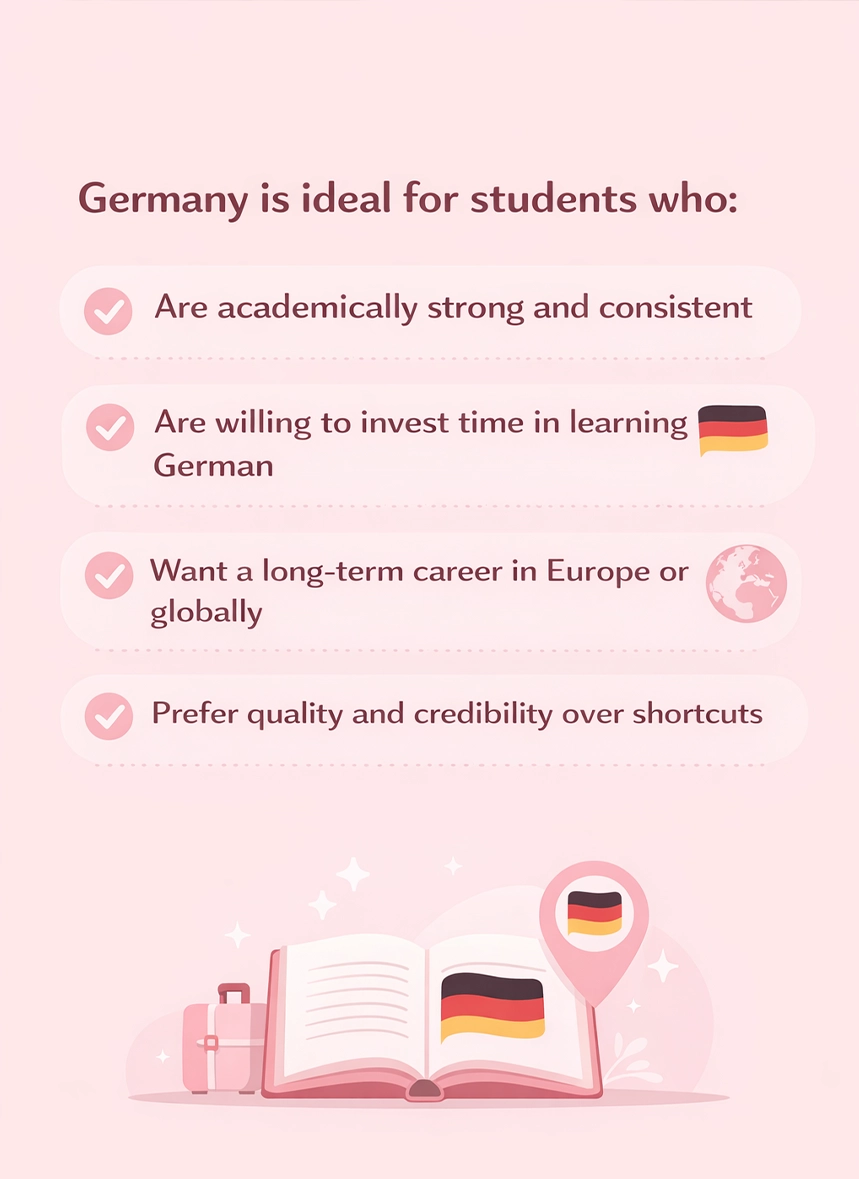
If you’re looking for quick entry or minimal effort, this may not be the right path. But if you’re focused on long-term value, Germany becomes one of the best choices available.
How MetaApply IE Helps With Low-cost MBBS in Germany Possible
Germany offers incredible opportunities, but only if you approach it correctly.
From understanding eligibility and preparing for language requirements to selecting the right universities and handling applications, every step need precision. That’s where MetaApply IE comes in.
With personalised counselling, structured guidance, and complete support from applications to visa processes, you don’t have to figure everything out alone. You get clarity, direction, and a roadmap that actually works.
Fill in the form today and let our expert counsellors provide you with premium counselling and help you be a doctor.
Frequently Asked Questions
Yes, public universities in Germany offer tuition-free or very low-cost education.
Yes, most programs require German language proficiency at B2 or C1 level.
Yes, Indian students can apply if they meet academic and language requirements.
Yes, it is widely recognised and respected worldwide.
Can I work in Germany after completing MBBS?
Related Blogs