Cost of Living in the USA for International Students- A Complete Guide
Study Abroad in USA: Visa, Required Documents, Rejection Reasons, and How to Apply
You have probably imagined it many times; walking across vibrant campus, attending lectures led by world-class professors, and building a future that reaches far beyond borders. For many students, the decision to Study in USA represents ambition, opportunity, and the promise of a global career. Yet the journey from university acceptance to actually boarding that flight is not always simple.
In recent years, the US student visa process has become more rigorous, with stricter scrutiny, detailed documentation checks, and highly competitive interviews. This means preparation matters more than ever. The good news is that thousands of students still successfully begin their academic journey in the USA every year. With the right understanding of Student Visa USA, proper documentation, and a clear academic purpose, you can navigate the process confidently and turn your dream of studying abroad in the USA into a reality.
Today, in this blog, we are going to tell you about the types of study visa for USA, what are the required documents, the reason of rejections, and How to Apply for a Study Visa for USA successfully. So, without further ado, let’s explore it all.
Different Types of USA Study Visa
Before you begin the visa application process, it is crucial you understand which visa category applies to your academic plans. Students who wish to study abroad in USA generally apply under one of the following visa types:
1. F-1 Visa
The F-1 visa is the most common student visa and is issued to students enrolling in academic programmes such as undergraduate, postgraduate, or doctoral degrees at Recognised Universities and colleges in the United States.
2. M-1 Visa
This visa is designed for students pursuing vocational or technical programmes. Unlike the F-1 visa, M-1 visas usually have stricter rules regarding employment and programme flexibility.
3. J-1 Exchange Visitor Visa
Some students participate in Exchange Programmes funded or sponsored by governments, institutions, or organisations. These students typically apply for a J-11 visa, which focuses on cultural and educational exchange.
Understanding the correct visa type ensures that your application aligns with your chosen academic pathway when planning to Study Abroad in USA.
Common Reasons Why Study Visa for USA Gets Rejected
Securing a study visa for USA can sometimes be challenging, especially when applicants lack clarity or proper documentation. When you plan to study abroad in USA, visa officer carefully assesses your academic intent, financial capability, and future plans before granting approval. Even small inconsistencies can lead to study visa rejection. Here, we have crafted a list of Reasons Why Study Visas for USA Gets Rejected.
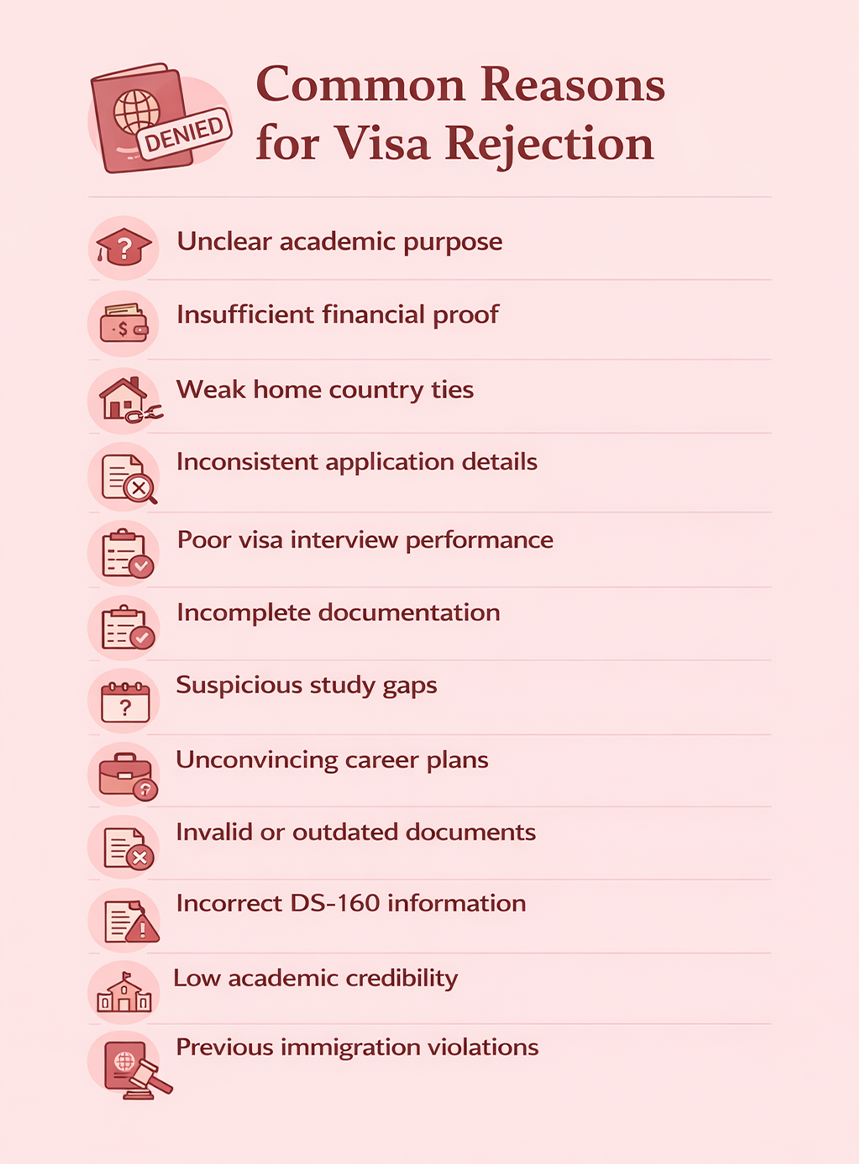
NOTE: Ensure your study visa for USA is rejection proof. And if you need personalised assistance for guarantee, you can connect with MetaApply IE experts for further assistance.
How to Secure Your USA Student Visa Successfully?
Now, we know that securing a Student Visa seem challenging, but with the right preparation, the process becomes far more manageable. When you plan to study abroad in USA, visa officers want to see clarity, credibility, and consistency in your application. This means demonstrating genuine academic intent, presenting organised documentation, and confidently explaining your study plans during interview. By preparing early and understanding what visa officers evaluate, you can strengthen your application and significantly improve your chances of obtaining a study visa for USA. You can always check your Visa Score before applying for a student visa for USA. Here’s how you should apply for the same.
1. Start Your Visa Process Early
Timing plays a crucial role when applying for a study visa for USA. Visa interview appointments can fill quickly, especially during peak admission seasons. Starting the process early allows you enough time to gather documents, complete application forms carefully, and schedule your visa interview without unnecessary pressure. Early preparation also helps you address any unexpected delays or additional document requests. Students planning to study abroad in USA benefit greatly from beginning the visa process as soon as they receive their university admission and Form I-20.
2. Choose the Right University and Programme
Your choice of university and course should reflect a clear academic direction. Visa officers often assess whether your selected programme logically aligns with your previous education and career goals. When you Apply for a Study Visa for USA, you should be able to confidently explain why you chose that particular university and how the course will support your long-term aspirations. A well-structured academic pathway reassures officers that your primary goal is to study abroad in USA for educational growth rather than other purposes.
3. Prepare Strong Financial Documentation
Financial stability is one of the most important factors in securing a study visa for USA. You must demonstrate that you can afford tuition fees, Living Expenses, and other costs throughout Education Loan approvals. Visa officers need assurance that you will not face financial difficulties during your studies. Proper financial planning not only strengthens your visa application but also shows that you are fully prepared for the responsibilities of study abroad in USA.
4. Maintain Consistency in Your Application
Consistency across all documents and information is essential during the visa process. Your DS-160 form, academic records, financial documents, and interview responses should align clearly with one another. Any discrepancies may raise doubts during the evaluation of your study visa for USA application. Carefully reviewing every detail before submission can prevent unnecessary complications. Students who maintain accurate and consistent information throughout their application demonstrate credibility and seriousness about their goal to study abroad in USA.
5. Prepare Thoroughly for the Visa Interview
The visa interview is often the most decisive stage when applying for a study visa for USA. Although interviews are usually short, they play a significant role in determining the outcome of your application. Visa officers may ask questions about your chosen university, programme, funding sources, and future career plans. Preparing thoughtful and honest responses helps you communicate your academic purpose clearly. Students planning to study abroad in USA should practise answering common interview questions confidently while remaining calm and authentic.
6. Demonstrate Strong Home Country Ties
One of the key factors visa officers evaluate is your intention to return to your home country after completing your studies. When applying for a study visa for USA, you should demonstrate strong connections to your home country through family ties, career prospects, or long-term goals. Clearly explaining how your international education will benefit your future opportunities back home reassures officers about your intention. This clarity often strengthens your credibility when planning to study abroad in USA.
7. Organise All Documents Carefully
Keeping your documents organised is essential for a smooth visa proecss. When applying for a study visa for USA, you should prepare a well-structured folder containing your passport. Form I-20, SEVIS fee receipt, DS-160 confirmation, academic transcripts, financial proof, and supporting documents. Having everything ready and accessible during your visa interview demonstrates preparedness and professionalism. Proper organisation also reduces stress during the process and helps you confidently move forward with your plans to study abroad in USA.
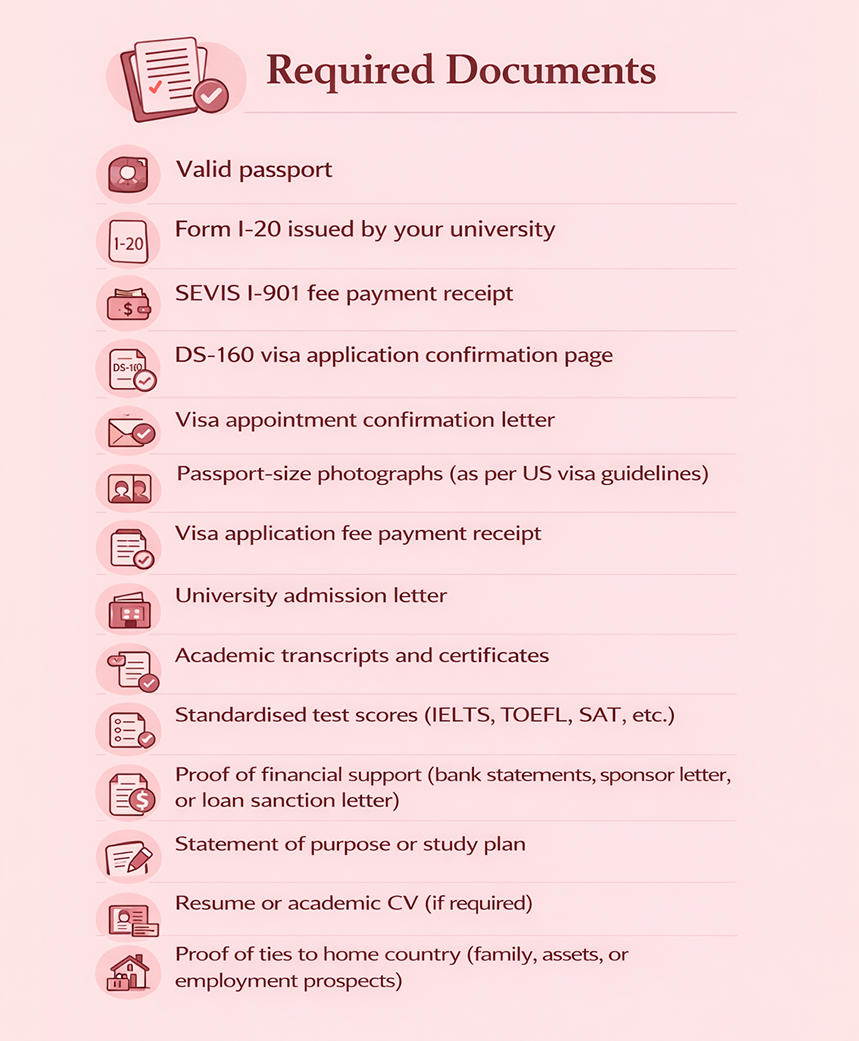
Important Documents Required for a USA Study Visa
Preparing the right documents is a crucial step when applying for a study visa for USA. Visa officers carefully review your paperwork to verify your admission, financial readiness, and genuine intent to study abroad in USA. Ensuring that all documents are accurate, valid, and well-organised can significantly strengthen your application.
Secure Your Study Visa for USA with MetaApply IE
Securing a study visa for USA can feel overwhelming, especially with increasing scrutiny and detailed documentation requirements. This is where MetaApply IE becomes your trusted partner in the journey to study abroad in USA. From helping you shortlist the right universities to guiding you through applications, visa documentation, and interview preparation, our experts ensure that every step of the process is handled with clarity and confidence.
At MetaApply IE, we support students with personalised counselling, university selection, application assistance, SOP Guidance, visa filing, mock interview preparation to strengthen your chances of approval. Beyond visas, we also assist with test preparation, financial guidance, and pre-departure support so you can begin your academic journey fully prepared.
With the right guidance from MetaApply IE, your dream to study abroad in USA moves from aspiration to achievement.
Frequently Asked Questions
To obtain a student visa, first secure admission to a SEVP-approved university. Receive your Form I-20, pay the SEVIS fee, complete the DS-160 form, schedule a visa interview, and present your academic, financial, and identity documents at the US embassy.
You must have admission from a recognised US university, a valid passport, Form I-20, SEVIS fee receipt, DS-160 confirmation, financial proof, academic records, and a successful visa interview showing genuine intent to study abroad in USA and then return home after graduation.
There is no fixed bank balance requirement, but you must show sufficient funds to cover at least on year of tuition and living expenses. This typically ranges between $30,000-$70,000 depending on the university and location.
IELTS is not directly required for a US student visa. However, many universities ask for English proficiency tests such as IELTS or TOEFL for admission. If your university requires it, the score becomes part of your visa documentation.
An F-1 student visa is generally valid for the duration of your academic programme. You can stay in the United States as long as you maintain full-time student status and may also receive a 60-day grace period after completion.
Related Blogs